Event Round-up: Semiconductors and Quantum: How can the UK drive forward these technologies together?
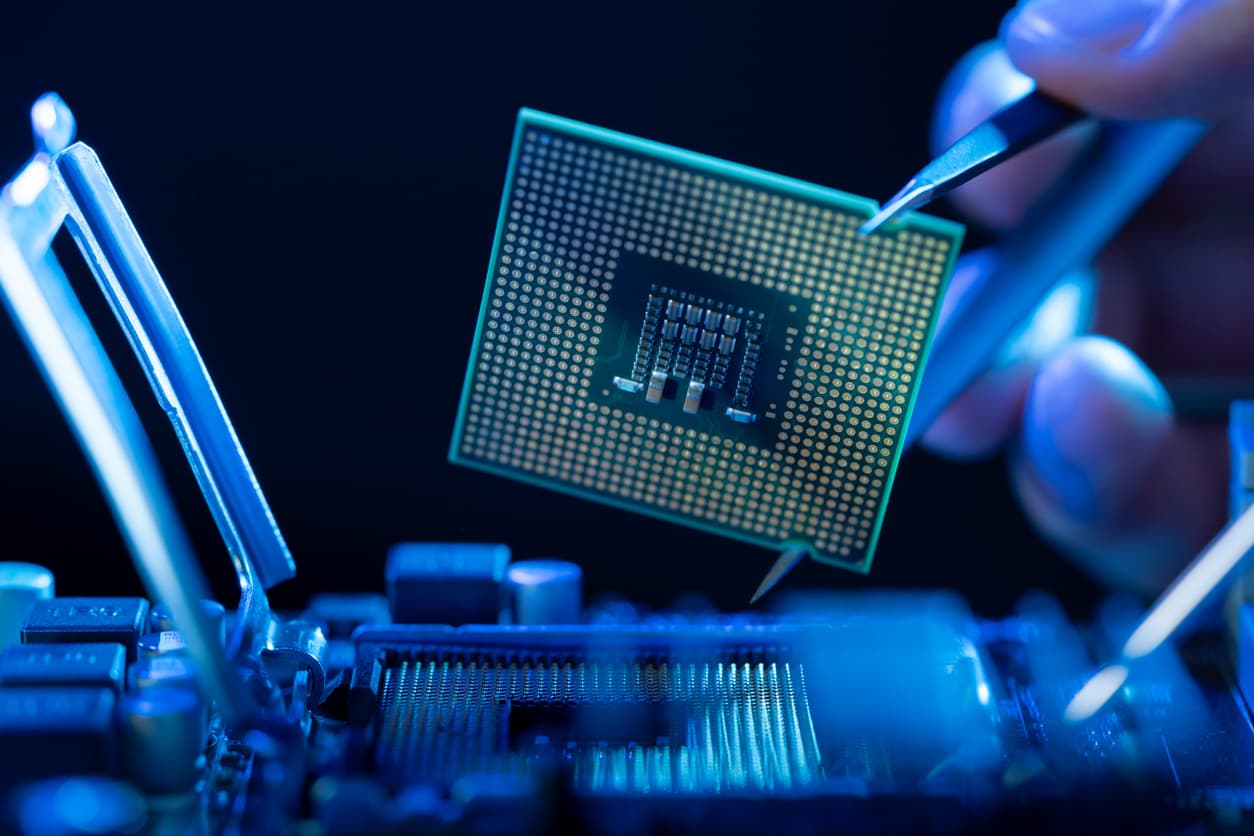
In February, techUK published our UK Plan for Chips: a new techUK blueprint, arguing that policymakers should support emerging technologies which have high potential for synergistic development.
In researching this report, quantum was identified as one of these technologies. The UK government has recognised the crucial role of both semiconductors and quantum as two of five critical technologies of tomorrow, each having a dedicated National Strategy to roadmap their development
In this online discussion, we explored the increasingly interconnected futures of quantum and semiconductor technologies in the UK. As these technologies evolve, their convergence is reshaping supply chains, innovation pathways, and infrastructure needs. This session aimed to unpack how quantum and semiconductors are driving each other forward, and how policy, funding, skills, and R&D support can accelerate progress across both.
We were proudly joined by:
-Marco Ghibaudi, Vice President of Engineering, Riverlane
-Robert Lamb, Chief Research and Technology Officer, Leonardo
-Richard Duffy, Senior Policy Advisor, Semiconductor team at Department for Science, Innovation and Technology
-Euan Allen, CTO and Co-founder, Siloton Limited
-Diego A. Quiñones, Innovation Lead - Quantum Technologies, Innovate UK
Keynote Speaker: The session began with presentation from Richard Duffy , Senior Policy Advisory - Semiconductors Unit at the Department for Science, Innovation and Technology
Richard Duffy presentation summary
Richard began by setting the scene of the current UK context. Key stats include:
There are 620 businesses involved in the semiconductor supply chain, with 210 of these being dedicated semiconductor companies.
These companies generate £9.6bn in revenue, with the potential for this to reach yp to £17bn by 20230. ~2% of global market; niche but strong in certain areas like chip design, compound semiconductors, and photonics.
67% design-focused, 28% manufacturing; 25 fabs exist, mostly in MEMS (Micro-Electro-Mechanical Systems), photonics, compound, advanced materials.
Following the 2023 National Semiconductor Strategy, a number of steps have been taken.
240 million this last spending period, much of that is focused on supporting, commercialisation and building up the sector.
Programmes like ChipStart help early-stage startups including quantum-adjacent ones like photonics, cryo-CMOS, and quantum algorithm processors.
UK Infrastructure Bank (now National Wealth Fund) has expanded further into semiconductors, with £60M already invested.
Under the new government, they’re developing a crosscutting Industrial Strategy. This highlighted eight growth driving sectors, in which they’ve reframed semiconductors. This alligns them with complementary sectors like digital tech, clean energy, defence.
DSIT is also planning a National Semiconductor Centre to:
Focus and accelerate UK semiconductor innovation.
Improving access to infrastructure, for prototyping, piloting and scale up.
Boosting the semiconductor skills and talent base
Boosting private sector investment into the sector for startups and scale ups.
Shared challenges across Deep Tech
Deep tech sectors face common challenges, including scale-up risks, with many startups either leaving the UK or staying early stage. Funding gaps are especially pronounced at early and scale-up stages. There's also a shortage of skilled tech talent and a shared need for infrastructure like fabs, packaging facilities, and photonics labs.
Quantum and semiconductor technologies share technical overlaps. Both rely on photonics (e.g., PICs, single-photon sources), advanced packaging (especially heterogeneous integration), CMOS and control systems, and nanofabrication techniques like epitaxy. There's also a growing demand for new design tools tailored to both sectors.
Conclusion
Quantum and semiconductors have many shared needs and opportunities. Quantum, though newer, has more developed UK policy support—offering a model for semiconductor strategy. The National Semiconductor Centre could play a key role in driving cross-sector innovation and scale-up.
Panel: Semiconductors and Quantum: How can the UK drive forward these technologies together?
Question 1: What do you think the current quantum and semiconductor opportunity is in the UK and how will this intersect with other national ambitions?
The panel examined the growing intersection between quantum technologies and the semiconductor sector in the UK, highlighting several key opportunities and challenges.
Opportunities & Challenges
Room-temperature RF control is emerging as a critical capability, particularly for quantum systems such as superconducting qubits and atomic platforms—areas where technical challenges remain considerable. A clear focus is needed on driving down costs and enabling scalability to support broader adoption. The UK’s established strengths in defence-related technologies present a strategic advantage, especially in quantum sensing and computing applications.
Strategic alignment with national goals
The UK’s ambition to become a global leader in quantum technologies aligns closely with efforts to strengthen the semiconductor sector. The two areas are increasingly interdependent, with advancements in one directly supporting the growth and viability of the other.
Photonics as a growth driver
Photonic chips represent a major opportunity, given their wide-ranging applications across quantum platforms and sectors such as healthcare. The UK, and particularly cities like Bristol, already boast strong academic and industrial ecosystems in this space, making it a natural area for investment and expansion.
Hybrid Classical-Quantum infrastructure
The future of quantum computing will rely heavily on hybrid systems that integrate semiconductors and photonics. Building this infrastructure is essential for unlocking scalable, next-generation quantum capabilities.
Regional and Industrial collaboration
The UK’s geographically dispersed semiconductor and photonics industries present a unique opportunity to create a resilient, distributed supply chain. Strengthening collaboration across regions and sectors will be key to advancing national innovation and economic security.
Question 2: Are these technologies—quantum, photonics, and semiconductors—communicating and collaborating effectively?
The panel highlighted a growing need for deeper cross-sector collaboration between photonics and semiconductors, both of which are foundational to the development of quantum technologies. It was noted that communication between these fields remains limited. As photonics continues to mature and semiconductors remain more established, better alignment is needed—particularly as innovations transition from academia into industry. A unified strategy or collaborative platform could help bridge the gap and drive joint progress.
Bridging the skills and knowledge divide
Despite technical overlaps, the required skill sets in photonics and semiconductors are often quite distinct. Many photonics specialists enter the field through PhD pathways, creating a high barrier to entry and limiting workforce scalability. This disconnect highlights the need for a more accessible and diverse talent pipeline.
Expanding education and training infrastructure
To support growth, there is a strong case for embedding photonics engineering and photonic integrated circuit (PIC) fabrication into undergraduate curricula. This would broaden participation and future-proof the sector. At the same time, the UK lacks sufficient PIC fabrication facilities, particularly for non-telecom quantum applications—a bottleneck that needs to be addressed to sustain long-term innovation.
Funding and investment gaps
While initiatives like Quantum Exponential provide some support, there is a clear need for more targeted venture capital and funding mechanisms focused on the semiconductor–quantum interface. Increased diversity in investment sources and structures would better support scale-up and commercialisation efforts across the ecosystem.
Skills task force and inclusive pathways
Panellists referenced the Quantum Skills Task Force, which is expected to release its findings soon. A key focus is on creating more varied and accessible entry routes into quantum careers beyond the traditional PhD model. This aligns with broader sectoral calls for inclusive education and training opportunities that can respond to evolving industry needs.
The AI–Quantum relationship
panellists highlighted the increasingly important intersection between AI and quantum computing. Quantum algorithms have the potential to accelerate AI training, while AI and high-performance computing (HPC) tools are vital for programming and managing complex quantum systems. This reciprocal relationship is now recognized in policy planning and is likely to guide future funding strategies.
Looking ahead
Speakers suggested that upcoming funding rounds will reflect this convergence, with a particular focus on the AI–quantum interface. The growing awareness of how these technologies complement and depend on one another points to a more integrated and strategic policy framework moving forward.
Question 3: What are the current barriers or obstacles hindering progress in quantum and semiconductor development in the UK?
Energy Efficiency as a market enabler
Panelists emphasised that energy efficiency—not just speed—will determine when quantum systems deliver real-world value. The point at which hybrid quantum-classical systems outperform classical ones in energy terms will be a key milestone. Currently, energy use is often overlooked in the race for performance, echoing early AI mistakes.
Regulatory and commercial barriers
Marco also highlighted import/export restrictions and national security concerns as major obstacles for startups. Unclear regulations make international scaling difficult. He called for the UK to clarify its strategy—whether it leans toward self-reliance, global collaboration, or a hybrid model. Euan echoed these concerns, noting that early-stage companies face delays due to regulatory red tape in sourcing components—especially when fast pivots are needed.
Question 4: Where should the UK prioritise efforts in quantum, photonics, and semiconductors?
Tackling practical growth barriers
Panellists highlighted key obstacles to scaling semiconductors and photonics for quantum technologies. These include high capital costs for equipment and foundries, complex manufacturing, skilled labour shortages, global supply chain dependencies, and geopolitical trade uncertainties.
Semiconductors and quantum are essential to quantum systems—they enable the movement and control of electrons and photons, which are fundamental to quantum data collection and processing. Photonics today was likened to semiconductors in the 1960s–70s, anticipating increasing specialisation and process diversity. Supporting this evolution requires investment in infrastructure and skills.
UK’s strength in Design and IP
The UK is particularly strong in design, software, and intellectual property. These capabilities—critical in semiconductors—can give the UK a competitive edge in the growing photonics sector as well. Speakers called for a cohesive national manufacturing strategy that integrates semiconductors, photonics, and potentially metamaterials. Hybridised production methods and cross-compatible foundry processes will be essential to building complex, application-specific circuits.
Question 5: Can the National Semiconductor Centre play a key role in UK resilience and help connect fragmented manufacturing efforts?
A case for a joined-up National Strategy
There was strong agreement on the need for a coordinated national manufacturing infrastructure that brings together semiconductors, photonics, and related technologies. Government-level orchestration is seen as essential to avoid fragmentation and to align with wider tech priorities such as quantum, AI, and telecoms.
Targeted Global collaboration, not duplication
Rather than trying to replicate global capabilities, the UK should focus on niche strengths—like photonic integrated circuits and IP design—while forming strategic international partnerships. The National Semiconductor Centre could serve as a central hub for aligning these efforts across sectors.
From R&D to real-world impact
There was a clear call to better translate R&D into applications, especially in quantum and semiconductors. A strong domestic supply chain was highlighted as foundational for long-term economic sustainability.
Stronger industry representation
There’s a shared opportunity to build deeper cross-sector connections. Structured industry platforms or bodies could help foster dialogue and integration between the semiconductor, photonics, and quantum communities.
Thanks to all delegates and speakers for making this event such a success. Don’t miss out on future events, sign up.
techUK – Unleashing UK Tech and Innovation
The UK is home to emerging technologies that have the power to revolutionise entire industries. From quantum to semiconductors; from gaming to the New Space Economy, they all have the unique opportunity to help prepare for what comes next.
techUK members lead the development of these technologies. Together we are working with Government and other stakeholders to address tech innovation priorities and build an innovation ecosystem that will benefit people, society, economy and the planet - and unleash the UK as a global leader in tech and innovation.
For more information, or to get in touch, please visit our Innovation Hub and click ‘contact us’.