Partnership, reinvention and delivery: reflections from techUK's Local public services innovation summit 2026
Reflections from techUK's Local public services innovation summit 2026
On 15 September, techUK brought together council leaders, digital chiefs, central government and suppliers for the Local Public Services Innovation Summit 2026. One message ran through the whole day: the sector already knows what needs to happen. It is now about doing it together, and doing it at scale.
The pause to Local Government Reorganisation (LGR), announced days before the Summit, shifted the conversation past disruption and towards the opportunity a pause creates: breathing space that can be spent rebuilding, or spent on the standardisation, shared capability and partnership work that a rushed reorganisation would never have allowed.
Here are the themes that came through most strongly.
Partnership is the operating model, not the warm-up act
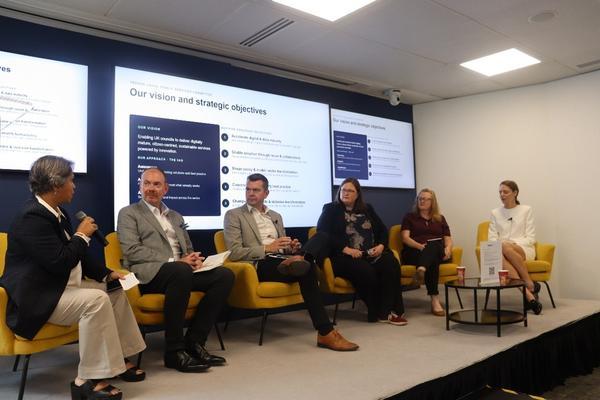
The day opened with the Local Public Services Committee, its ambassadors and partners describing how they actually work together. The committee's role was framed as convener, enabler and bridge: not another playbook, not another pilot. What it needs is adoption.
Two things stood out as genuinely new. The first is the ambassador model, which puts serving local government leaders inside the committee rather than adjacent to it. The value is candour, being able to say "suppliers aren't evil and councils aren't stupid" and move on to the problem. The second is the renewed memorandum of understanding with the Local Government Association, and the fortnightly working rhythm behind it. Where suppliers and councils were once convened separately, they are now in the same room, and it turned out they wanted the same outcomes in different language.
The ask back to industry was direct: create space before you sell. Councils described themselves as stuck in A&E when they need to be in R&D, with the bandwidth for a conversation about outcomes rather than a product demonstration. The partnership work on LGR was cited as the proof that this can work — time given on both sides, competitors sitting side by side, and momentum that nobody expected.
From reorganisation to reinvention
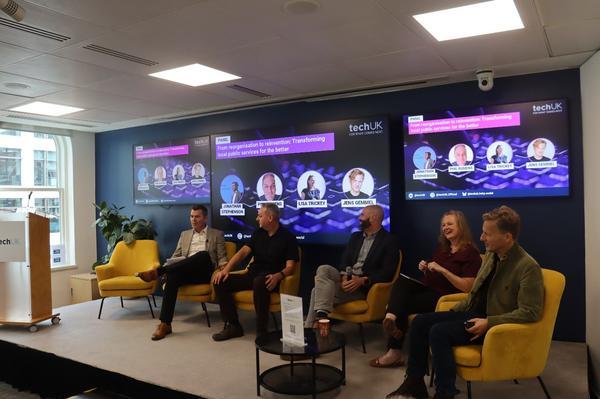
The panel on reorganisation and reinvention made a distinction worth holding onto. Transformation implies moving from one state to another. Reinvention means building a council that can absorb whatever arrives next — a pandemic, a resettlement programme, an AI capability shift — without needing a restructure each time. Most councils are not yet in that position, and structure alone will not get them there.
There was broad agreement that the LGR programme had been moving too fast, with more than 200 councils in scope at once. Devolution remains a clear priority, and the view from the panel was that unitaries make a sound foundation for strategic authorities — so the two agendas should be aligned rather than sequenced.
The real risk identified was not the pause itself but what happens during it. Councils that had been planning shared transformation as part of a new unitary have gone back to their own budget gaps, alone. One panellist gave it three months before regional collaboration collapses back into silos — and framed preventing that as a job for the whole sector, not just for government.
AI: the conversation has grown up
The AI panel was noticeably less breathless than it would have been two years ago. The shift described was from "I want some of that" to "what outcome am I trying to achieve, and is AI even the right tool for it?" Councils doing this badly start with the technology and look for somewhere to put it. Councils doing it well start with where they are trying to get to in three years, then choose from the whole innovation toolkit, of which AI is one part.
The barriers are consistent and unglamorous. A 2025 sector survey put workforce digital literacy first, data quality second and governance third. Councils describe their own data as incomplete, inaccurate and duplicated, which is why the advice from the panel was to treat data foundations and governance as the starting point rather than a retrospective fix. There is also a gap in training for elected members, who are intrigued by AI but have had almost no support in using it.
A recurring caution: AI is not a headcount reduction tool. Where a council is discharging a statutory function, keeping a human in the loop is fundamental.
MHCLG's Local AI team, less than a year old, set out its approach: scale capability centrally so that councils are not each starting from scratch, and help spread what individual councils have already built. Its first product, a transcription tool adapted from existing central government work, enters private beta next month starting with housing. There is a fair question behind it — why is every council writing its own AI policy from first principles?
Reuse, standards and the market picture
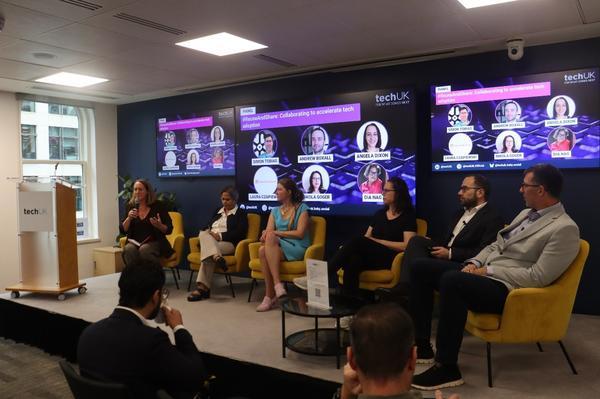
The reuse and share session was the most practical hour of the day. The problem was put simply: the sector still behaves like a collection of startups, each building the same thing in isolation. Across government there are perhaps two dozen genuine service patterns, yet one panellist had reviewed 107 data protection impact assessment forms and found only two that matched. Work is underway on a cross-government reuse library, and the ask to industry was specific: contribute material, and contribute the cost evidence that makes the economic case provable.
That case is harder than it looks, because much of the benefit is opportunity cost rather than cashable saving, and most business cases demand the latter. The counter-argument offered was resilience: teams that had already built reusable components were the ones able to stand up entirely new services at speed when the unexpected arrived.
Running underneath this is the question of what is genuinely local and what is simply organisational ego. Charging policy and local priorities will always differ. How an address, a person or an organisation is defined should not — and neither, as one speaker put it, should processing an invoice. Central work on data standards, architecture and common components is intended to settle the second category so councils can spend their effort on the first.
The market data presented at the Summit gives this urgency. Local government tech spend fell for the first time in years:
Procurement: don not bid for success and contract for failure
The value in procurement sits at the two ends — early market engagement and contract management — and the sector has spent years pouring its attention into the tendering process in the middle. Two practical points landed hard: do not run early market engagement after the budget is already set, because the envelope is fixed and the exercise is close to pointless; and do not be afraid to discuss cost at that stage, because avoiding it produces specifications nobody can honestly bid against.
There was candour on both sides. Buyers acknowledged that writing impossible requirements across dozens of frameworks invites low-balling. Suppliers were asked to push back and to tell a council when the thing it plans to buy will not achieve the outcome it wants. The relationships that were described as strongest all started with a supplier saying no.
What happens next
The Summit closed on the point it opened with: the conversations do not stay in the room. techUK's Local Public Services Programme will take forward the reuse and share work, the procurement workstream and continued joint working with the LGA, GDS Local and MHCLG through the Local Public Services Committee.
If you would like to be part of that — as a council, a supplier or a partner — get in touch with the Local Public Services Programme team.
Georgina Maratheftis
Associate Director, Local Public Services, techUK
Georgina Maratheftis
Associate Director, Local Public Services, techUK
Georgina is techUK’s Associate Director for Local Public Services
Georgina works with suppliers that are active or looking to break into the market as well as with local public services to create the conditions for meaningful transformation. techUK regularly bring together local public services and supplier community to horizon scan and explore how the technologies of today and tomorrow can help solve some of the most pressing problems our communities face and improve outcomes for our people and places.
Prior to techUK, Georgina worked for a public policy events company where she managed the policy briefing division and was responsible for generating new ideas for events that would add value to the public sector. Georgina worked across a number of portfolios from education, criminal justice, and health but had a particular interest in public sector transformation and technology. Georgina also led on developing relationships across central and local government.
If you’d like to learn more about techUK, or want to get involved, get in touch.
Programme Manager – Local Public Services and Nations and Regions, techUK
Luke Newcombe
Programme Manager – Local Public Services and Nations and Regions, techUK
Luke joined techUK in September 2025 as a Programme Manager for Local Public Services and Nations and Regions.
Luke works closely with members and stakeholders across industry and government at local, regional and national levels to support collaboration, drive innovation and strengthen tech-enabled public services. His work supports the development of strong local and regional tech economies by helping organisations to engage with public sector challenges, explore emerging technologies and build impactful partnerships.
Prior to joining techUK, Luke worked at Enterprise Ireland, the Irish government’s export development agency. He began by advising SMEs on export strategy to the UK and later focused on connecting Irish businesses with multinational organisations to foster strategic partnerships, drive international growth and support economic development.
Luke holds an MSc in Political Economy from the University of Amsterdam and a BA in European Studies from Trinity College Dublin.
Our Local Public Services Programme helps techUK members to navigate local government. We champion innovation that can create truly digital local public services helping to create thriving, productive and safer places for all. Visit the programme page here
Local Public Services Innovation Summit 2026
Local government is navigating one of its most significant periods of change — from local government reorganisation and recent elections to mounting pressure to deliver more with less. techUK's Local Public Services Innovation Summit brings together council leaders and technology suppliers to explore what digital transformation, procurement reform, and agentic AI mean in practice for the council of the future, and how industry and local government can drive real progress together.
Our members develop strong networks, build meaningful partnerships and grow their businesses as we all work together to create a thriving environment where industry, government and stakeholders come together to realise the positive outcomes tech can deliver.
Georgina is techUK’s Associate Director for Local Public Services
Georgina works with suppliers that are active or looking to break into the market as well as with local public services to create the conditions for meaningful transformation. techUK regularly bring together local public services and supplier community to horizon scan and explore how the technologies of today and tomorrow can help solve some of the most pressing problems our communities face and improve outcomes for our people and places.
Prior to techUK, Georgina worked for a public policy events company where she managed the policy briefing division and was responsible for generating new ideas for events that would add value to the public sector. Georgina worked across a number of portfolios from education, criminal justice, and health but had a particular interest in public sector transformation and technology. Georgina also led on developing relationships across central and local government.
If you’d like to learn more about techUK, or want to get involved, get in touch.
Programme Manager – Local Public Services and Nations and Regions, techUK
Luke Newcombe
Programme Manager – Local Public Services and Nations and Regions, techUK
Luke joined techUK in September 2025 as a Programme Manager for Local Public Services and Nations and Regions.
Luke works closely with members and stakeholders across industry and government at local, regional and national levels to support collaboration, drive innovation and strengthen tech-enabled public services. His work supports the development of strong local and regional tech economies by helping organisations to engage with public sector challenges, explore emerging technologies and build impactful partnerships.
Prior to joining techUK, Luke worked at Enterprise Ireland, the Irish government’s export development agency. He began by advising SMEs on export strategy to the UK and later focused on connecting Irish businesses with multinational organisations to foster strategic partnerships, drive international growth and support economic development.
Luke holds an MSc in Political Economy from the University of Amsterdam and a BA in European Studies from Trinity College Dublin.