Reflections from CSW70: Strengthening access to justice for women and girls

The 70th session of the United Nations Commission on the Status of Women (CSW70) brought together governments, civil society and stakeholders from across the world to advance gender equality.
I was honoured to attend the closing event for this year’s iteration in London, joining conversations on persistent inequalities and, critically, what must come next following the commitments agreed by member states in New York earlier last month, and how these can be translated into meaningful, sustained action.
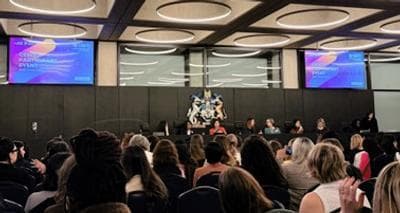
One of the clearest messages from the day was that justice does not begin or end in the courtroom. True justice is about power, who holds it, who is protected, and who is heard. It must exist at every level of society and, just as importantly, be rooted in prevention as much as response.
At a government level, discussions highlighted the need for justice frameworks that are genuinely accessible, affordable, and designed to work for all women. While legal protections exist on paper, too many women and girls still face barriers to justice. For many women, justice is the difference between being believed or dismissed, safety or silence, accountability or continued harm.
At an organisational level, there was a strong call for employer law to translate into lived practice. Policies must be active and credible within workplaces, supported by leadership and culture. A recurring point was the importance of engaging men in this journey, not as bystanders, but as allies who recognise that equality strengthens organisations and society as a whole.
At a community and human level, the emphasis moved to connection, education, and engaging in difficult conversations. Justice requires women and girls to know their rights, feel able to speak up, and access trauma informed support. It also requires communities to challenge harmful norms, understand each other better, and actively work to dismantle the narratives that marginalise or demonise difference.
A particularly powerful session with Dr Halima Kure, Senior Lecturer in Cybersecurity at the University of East London, explored how technology and AI intersect with justice. While digital tools offer real opportunities to advance justice, including detecting harm and supporting victims and survivors, they also carry significant risks. Algorithms and data driven systems are often shaped by invisible biases, influencing who is seen, heard, or prioritised. For many women and girls, digital spaces are not neutral and can be difficult or unsafe to navigate.
Our workshop discussions focused on how technology can both enable and obstruct justice. We discussed the urgent need for women to be involved at every stage of design and development. Inclusion must mean more than participation as users. Women need to be shaping the systems themselves, from data to deployment, and supported to enter and progress in a technology sector that remains overwhelmingly male dominated.
Looking ahead, there is a clear demand for stronger action on Violence Against Women and Girls (VAWG), the removal of barriers to participation in governance and justice, the protection of civic spaces, and the responsible use of technology that advances women’s rights.
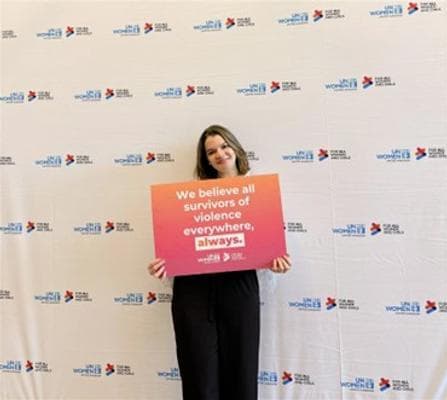
Attending CSW70 was also a powerful reminder of why this work matters so deeply to me, both personally and professionally. At techUK, we are driven by a clear ambition to harness the power of technology to help eradicate VAWG, and to ensure justice systems work better for those who need them most. From data sharing and digital safeguarding, to improving victims’ access to support and justice, technology has a critical role to play.
Being part of these global conversations reaffirmed my belief, and techUK’s commitment, that meaningful progress on VAWG will only be achieved through collaboration, innovation and a clear focus on practical, technology-enabled solutions that deliver real-world impact.
If you would like to find out more about techUK’s work on tackling VAWG and RASSO, please reach out to the JES team, or visit the VAWG and RASSO Hub for relevant updates.