India AI Impact Summit: Day 5

Day 5 brought the AI Impact Summit to a fitting close, with a morning of deep policy discussions and an afternoon of celebration, reflection, and farewells in the UK pavilion. After a week of intense engagement, the final day underscored the central themes that have defined the summit: inclusion, skills, trust, and the recognition that AI governance must be a truly global endeavour.
The day kicked off with a breakfast meeting hosted by KPMG at Goals House, focused on enterprise AI adoption. The conversation was wide-ranging and candid, touching on the importance of trust as the foundation for AI deployment at scale, what different sectors can learn from one another, and the critical role of skills and talent in determining who benefits from AI. One observation emerged early: this summit has been markedly different in character from Paris.
While the Paris AI Action Summit drew around 3,000 attendees, New Delhi welcomed over 300,000 people, including a visible and energised cohort of young people and students. The scale and openness of this summit has captured the imagination of the nation in a way that previous summits did not, reinforcing India's commitment to making AI a conversation for everyone, not just elites.
The discussion also emphasised that guardrails must be in place no matter what, and that the thread of exclusion remains a live issue. As AI becomes a national conversation, it must be aligned with existing ESG frameworks. Many of the challenges being discussed around AI, dual-use risks, equity, accountability, are already reflected in ESG, and the integration of AI governance into these established structures is essential.
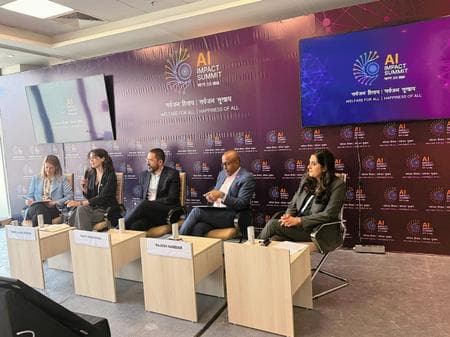
As one participant noted, all technology is a double-edged sword: it can be used to help, but we also have threat actors. The importance of the human element was a recurring theme, with the Head of UN Global Impact present to reinforce that we are all co-creators of AI's future. Later in the morning, techUK convened a timely panel discussion on "Rightsizing Governance in an AI-Driven World," exploring how countries can collaborate to ensure AI development is both equitable and innovation-friendly. Moderated by Sabina Ciofu, International Policy and Strategy Lead at techUK, the panel brought together Raffi Krikorian from Mozilla, Isabella Wilkinson from Chatham House, Rajesh Nambiar from NASSCOM, and Halak Shrivastava from Cohere to examine the geopolitical, technical, and institutional dimensions of global AI governance.
The conversation centred on a shared challenge: how to expand access to compute, data, and regulatory capacity without deepening digital divides or fragmenting standards across jurisdictions. Panelists emphasised that effective AI governance must move beyond high-level principles towards practical cooperation — through interoperable standards, pooled infrastructure models, skills development, and public-private partnerships.
From open ecosystem design choices that lower barriers to entry, to the role of international coalitions in aligning risk management approaches, the discussion highlighted concrete pathways for "levelling the playing field" for emerging and smaller states. Across sectors including healthcare, education, and climate resilience, speakers underscored that governance frameworks should enable responsible innovation, strengthen institutional capacity, and foster long-term capability — ensuring that countries at different stages of AI maturity can participate in shaping the global AI landscape.
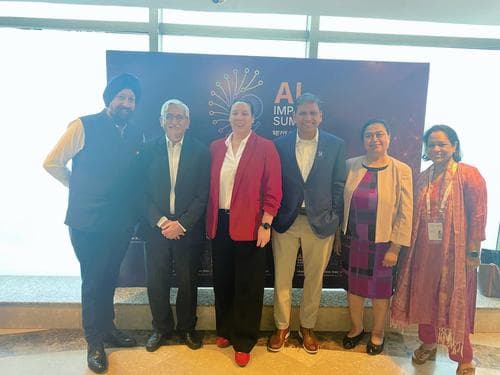
Meanwhile, techUK’s Director of Tech and Innovation Sue Daley sat on a NASSCOM-hosted panel on AI and workforce transformation, titled "AI and Workforce Transformation: India's Roadmap to Global Competitiveness." The session examined how AI is reshaping jobs, skills, and productivity, and how India can convert this disruption into a lasting strategic advantage.
The discussion focused on building inclusive, AI-native talent pipelines through skilling, reskilling, vernacular learning, and industry-academia collaboration. Joining Sue on the panel were Ravi Aurora, Senior Vice President of Global Public Policy & Government Affairs at Mastercard, and Srikrishna Ramakarthikeyan, CEO & Executive Director of Hexaware, both techUK members. The session brought together policymakers, industry leaders, academics, and technology SMEs to identify actionable pathways to position India as the world's most trusted, resilient, and globally competitive AI talent hub by 2030.
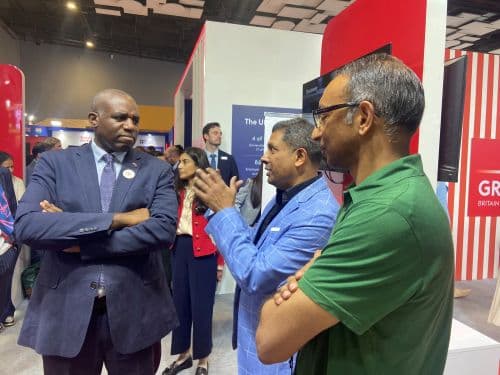
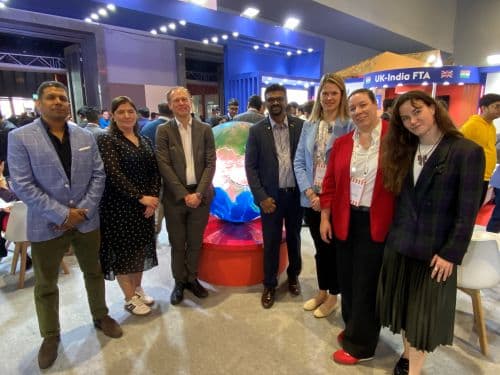
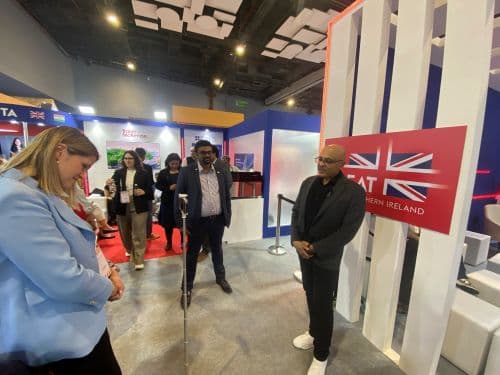
The afternoon saw a fitting reunion and send-off in the UK pavilion, with talks and recordings of Vox Pop reflections (video coming soon) celebrating the week's achievements and spotlighting UK businesses. The UK's Deputy Prime Minister David Lammy MP visited the UK pavilion where our delegates spoke to him about their work, all shaking hands, some asking for selfies — good to be in discussion.
The pavilion welcomed two firesides with UK AI Minister Kanishka Narayan MP in dialogue with the CEO of Cognizant, as well as representatives from Fractile, spotlighting the strength and breadth of the UK AI ecosystem. It was a warm and energising close to a week that has been as demanding as it has been rewarding.
As the summit drew to a close, the techUK delegation reflected on a week that has shifted the global AI conversation. This was the first AI summit hosted in the Global South, and it has succeeded in centering the voices, needs, and ambitions of global majority countries in a way that previous summits have not. The scale, inclusivity, and energy of the New Delhi summit — with over 300,000 attendees, a visible youth presence, and a relentless focus on impact over abstraction, set a new benchmark for what these convenings can achieve.
The themes that have emerged over five days are clear: AI governance must be practical, inclusive, and globally coordinated. Skills and talent are not peripheral concerns but foundational to ensuring AI's benefits are broadly shared. Trust, assurance, and evidence-based frameworks are what will allow AI to scale responsibly. And the UK-India partnership, strengthened through this week's engagements, is proving to be a crucial axis in shaping a future where AI serves everyone.
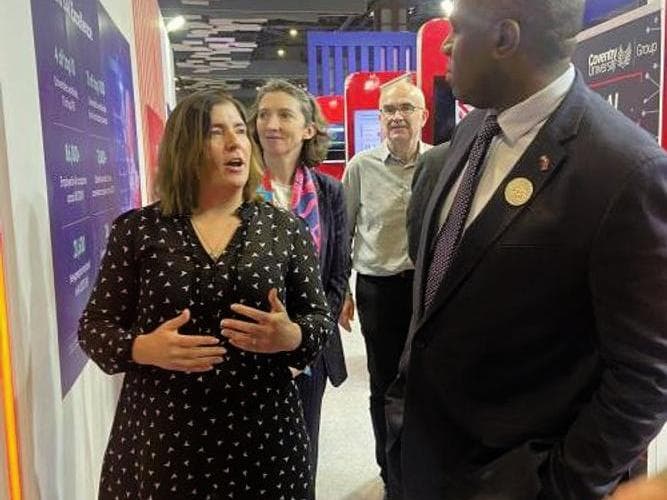
For techUK and the 21 member companies represented on the ground in New Delhi, this summit has been an opportunity to engage, learn, advocate, and build relationships that will shape the next phase of international AI cooperation. The conversations don't end here, they begin here. And the work continues.
We will have an insight with you shortly which highlights all of the key outcomes.