

Technology and Innovation programme activities
techUK bring members, industry stakeholders, and UK Government together to champion emerging technologies as an integral part of the UK economy. We help to create an environment where innovation can flourish, helping our members to build relationships, showcase their technology, and grow their business. Visit the programme page here.
Upcoming events


Latest news and insights
Learn more and get involved
Sign-up to get the latest updates and opportunities across Technology and Innovation.
Meet the team
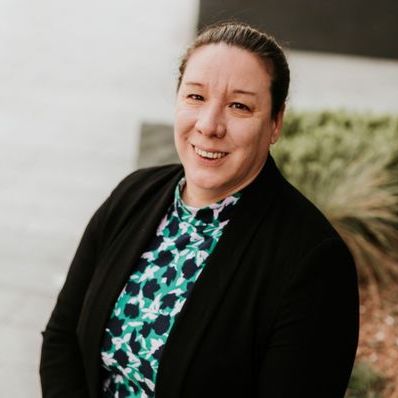
Sue Daley OBE
Sue Daley OBE
Sue leads techUK's Technology and Innovation work. This includes work programmes on AI, Cloud, Data, Quantum, Semiconductors, Digital ID and Digital ethics as well as emerging and transformative technologies and innovation policy. In 2025, Sue was honoured with an Order of the British Empire (OBE) for services to the Technology Industry in the New Year Honours List. She has also been recognised as one of the most influential people in UK tech by Computer Weekly's UKtech50 Longlist and was inducted into the Computer Weekly Most Influential Women in UK Tech Hall of Fame.
A key influencer in driving forward the tech agenda in the UK, in December 2025 Sue was appointed to the UK Government’s Women in Tech Taskforce by the Technology Secretary of State. She also sits on the UK Government’s Smart Data Council, Satellite Applications Catapult Advisory Group, Bank of England’s AI Consortium and BSI’s Digital Strategic Advisory Group. Previously, Sue was a member of the Independent Future of Compute Review and co-chaired the National Data Strategy Forum. As well as being recognised in the UK's Big Data 100 and the Global Top 100 Data Visionaries in 2020, Sue has been shortlisted for the Milton Keynes Women Leaders Awards and has been a judge for the Loebner Prize in AI, the UK Tech 50 and annual UK Cloud Awards. She is a regular industry speaker on issues including AI ethics, data protection and cyber security.
Prior to joining techUK in January 2015, Sue was responsible for Symantec's Government Relations in the UK and Ireland. Before that, Sue was senior policy advisor at the Confederation of British Industry (CBI). Sue has an BA degree on History and American Studies from Leeds University and a Master’s Degree in International Relations and Diplomacy from the University of Birmingham. Sue is a keen sportswoman and in 2016 achieved a lifelong ambition to swim the English Channel.
- Email:
- [email protected]
- Phone:
- 020 7331 2055
- Twitter:
- @ChannelSwimSue
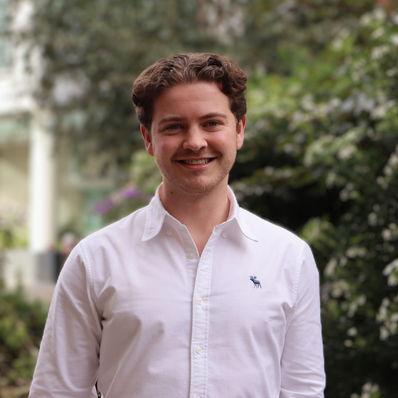
Rory Daniels
Rory Daniels
Rory joined techUK in June 2023 after three years in the UK Civil Service on its Fast Stream leadership development programme.
During this time, Rory worked on the Government's response to Covid-19 (NHS Test & Trace), school funding strategy (Department for Education) and international climate and nature policy (Cabinet Office). He also tackled the social care crisis on secondment to techUK's Health and Social Care programme in 2022.
Before this, Rory worked in the House of Commons and House of Lords alongside completing degrees in Political Economy and Global Politics.
Today, Rory leads techUK's five-strong Emerging Technology and Innovation team, working with many of the UK's most innovative tech companies to convene experts and decision-makers, showcase best practice, shape government's thinking, and ensure the UK leads on developing and deploying transformative technologies.
The team's main areas of focus are AI Innovation, Quantum, Semiconductors, Robotics, Photonics, Neuromorphic, Innovation Policy, and Technology Convergence.
Rory sits on DSIT's expert Robotics Advisory Group, hosts techUK's Meet the Innovators video interview series, and chairs techUK's Emerging Tech Leadership Committee, comprising 36 senior leaders from the UK's most exciting tech companies. He has also judged the Global Space Awards, hosted London Tech Week's Deep Tech Stage, completed Stanford University's Tech & Entrepreneurship residency, and given oral evidence in a House of Lords Select Committee.
In his spare time, Rory enjoys photography, reading non-fiction (tech, architecture, design & geopolitics), and searching for London's best burger.
- Email:
- [email protected]
- LinkedIn:
- https://www.linkedin.com/in/rorydaniels28/

Tess Buckley
Tess Buckley
Tess is a digital ethicist and musician. After completing a MA in AI and Philosophy, with a focus on ableism in biotechnologies, she worked as an AI Ethics Analyst with a dataset on corporate digital responsibility (paid for by investors that wanted to understand their portfolio risks). Tess then supported the development of a specialised model for sustainability disclosure requests. Currently, at techUK, her north star as programme manager in digital ethics and AI safety is demystifying, and operationalising ethics through assurance mechanisms and standards. Outside of Tess's work, her primary research interests are in AI music systems, AI fluency and tech by/for differently abled folks.
- Email:
- [email protected]
- Website:
- tessbuckley.me
- LinkedIn:
- https://www.linkedin.com/in/tesssbuckley/

Usman Ikhlaq
Usman Ikhlaq
Usman joined techUK in January 2024 as Programme Manager for Artificial Intelligence.
He leads techUK’s AI Adoption programme, supporting members of all sizes and sectors in adopting AI at scale. His work involves identifying barriers to adoption, exploring solutions, and helping to unlock AI’s transformative potential, particularly its benefits for people, the economy, society, and the planet. He is also committed to advancing the UK’s AI sector and ensuring the UK remains a global leader in AI by working closely with techUK members, the UK Government, regulators, and devolved and local authorities.
Since joining techUK, Usman has delivered a regular drumbeat of activity to engage members and advance techUK's AI programme. This has included two campaign weeks, the creation of the AI Adoption Hub (now the AI Hub), the AI Leader's Event Series, the Putting AI into Action webinar series and the Industrial AI sprint campaign.
Before joining techUK, Usman worked as a policy, regulatory and government/public affairs professional in the advertising sector. He has also worked in sales, marketing, and FinTech.
Usman holds an MSc from the London School of Economics and Political Science (LSE), a GDL and LLB from BPP Law School, and a BA from Queen Mary University of London.
When he isn’t working, Usman enjoys spending time with his family and friends. He also has a keen interest in running, reading and travelling.
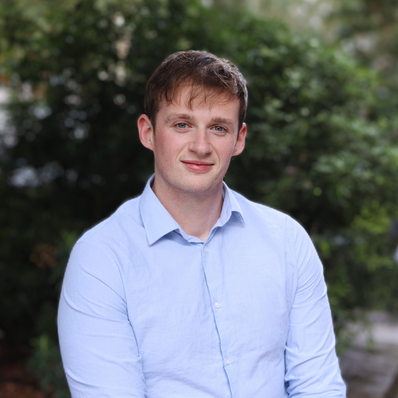
Elis Thomas
Elis Thomas
Elis joined techUK in December 2023 as a Programme Manager for Tech and Innovation, focusing on Semiconductors and Digital ID.
He previously worked at an advocacy group for tech startups, with a regional focus on Wales. This involved policy research on innovation, skills and access to finance.
Elis has a Degree in History, and a Masters in Politics and International Relations from the University of Winchester, with a focus on the digitalisation and gamification of armed conflicts.
- Email:
- [email protected]
- Website:
- www.techuk.org/
- LinkedIn:
- https://www.linkedin.com/in/elis-thomas-49a1aa1a1/

Sara Duodu
Sara Duodu
Sara joined techUK in October 2025 as Programme Manager for Quantum and Digital Twins.
Before joining techUK, Sara worked at Capital Enterprise as Research Lead, where she focused on policy research related to the UK’s startup ecosystem. During her time there, she co-authored a flagship report unpacking what quantum startups in the UK need to grow and stay in the UK.
Sara holds a Master of Global Affairs (Innovation Policy & Global Security) from the Munk School of Global Affairs & Public Policy, and an MA (History) and a BA (History & Political Science) from the University of Western Ontario.
Outside of work, Sara enjoys reading, playing rugby, and watching any and all sports.
- Email:
- [email protected]

Ella Shuter
Ella Shuter
Ella joined techUK in July 2025 as Junior Programme Manager for Emerging Technologies.
In her role, Ella supports the design and delivery of four to six-month sprint campaigns. These identify emerging technologies of interest to members and Government, share industry best practice, champion relevant sectors and industries across the UK, and work through key challenges and opportunities to drive the development, application and commercialisation of these technologies.
Before joining techUK, Ella completed an internship at Digital Catapult, supporting across public affairs, policy and the organisation's programmes. She also has experience working in an MP's Parliamentary and Constituency Office.
Ella holds a BSc in Politics and International Relations from the University of Bristol.
- Email:
- [email protected]
- LinkedIn:
- https://www.linkedin.com/in/ella-shuter-264158244/
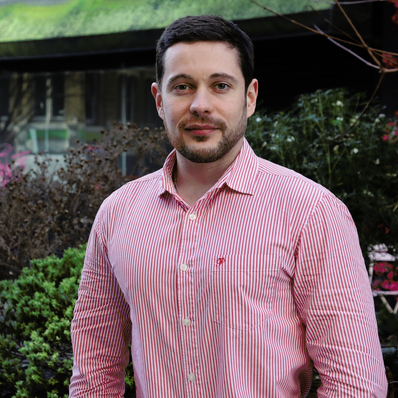
Luke Lightowler
Luke Lightowler
Luke is a Junior Programme Manager in techUK’s Emerging Tech and Innovation team. He works on techUK’s robotics programme, collaborating closely with members, policymakers and stakeholders to support the safe development, deployment and adoption of robotics technologies across the UK. Alongside this, he also contributes to the team’s wider work on emerging technologies.
Luke began his career on the DHL Supply Chain graduate scheme, where he worked across large-scale logistics operations and supported transformation initiatives focused on efficiency, automation and process improvement. This gave him first-hand experience of complex industrial environments and the practical application of technology within supply chains.
Following this, Luke worked for Michelle Donelan MP, focusing on policy communications and parliamentary engagement. He supported briefing, stakeholder engagement and cross-sector communications, gaining insight into how legislation and policy are shaped and debated, as well as developing a strong understanding of parliamentary process.
He later worked at the Department for Transport as a Senior Policy Advisor, focusing on digital policy development and leading on data-driven programme delivery within government. This strengthened his understanding of policymaking and the regulatory and digital landscape shaping emerging technologies.
Luke holds a degree in Mechanical Engineering, which provides him with a strong technical foundation and a particular interest in robotics, automation and applied engineering.
Outside of work, Luke enjoys weight training, walking (particularly in Wiltshire and the Cotswolds) and reading non-fiction. He previously spent time at a Shaolin temple in the rural mountains of Shandong province, China, where he studied Kung Fu while living alongside Shaolin monks - an experience that also sparked his appreciation (and slight obsession) for tea.
- Email:
- [email protected]
