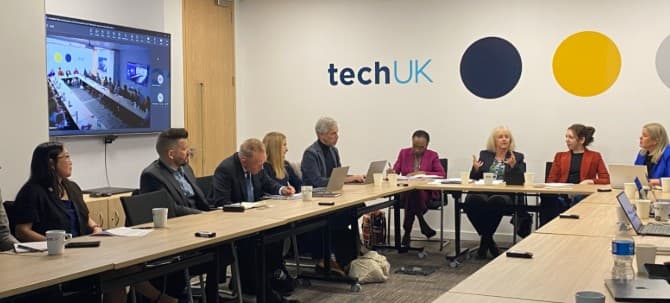
Roundtable summary: Where are the women in the UK semiconductor sector? Pathways for careers in semiconductors

Keynote- Ruth Jones MP, MP for Newport West and Islwyn
Our session began with an opening address from Ruth Jones MP, offering her perspectives on the current state of the sector’s skill force, with a particular focus on her constituency in South Wales.
Ruth emphasised the importance of inclusion: diverse teams produce more robust scientific solutions and file 20% more patents than non-diverse teams.
However, the semiconductor workforce falls short of the UK Government’s target of 35% women in STEM. Of the 27,000 people employed in the UK semiconductor sector, only 26% are women, and just 18% of technical roles are held by women, despite 70% of roles being technical. Although a record 45,000 girls took A-level physics, this still represents only 24% of entrants. Companies like Vishay and KLA have started engaging with primary schools, making STEM “flashy” and fun. Ruth stressed that even outreach at age 14–15 is too late.
Ruth also identified that the National Semiconductor Strategy fails to reference early-stage gender diversity. She welcomed efforts to create stronger vocational and technical education pathways.
Ruth also stressed that recruitment is not the only issue- retention matters, and more research is needed into why women leave the sector. Drawing on her background in trade unions, she argued that better workplace policies are needed to keep women in STEM roles.
Keynote 2: Nuala Kilmartin -Innovation Lead, Secure and Resilient Growth, Innovate UK UKRI
Nuala provided our second keynote of the day, outlining her perspective from Innovate UK, and some of the work they’ve done- and are doing- to support the sector’s growth.
Nuala’s work involves connecting businesses to the partners, customers and investors that can help turn these ideas into commercially successful products and services, driving productivity, and supporting business growth. She discussed the high potential but high-risk nature of semiconductor innovation, and that Innovate UK supports scaling and sovereign business growth through innovation contracts.
She argued that early, targeted STEM outreach, particularly for students aged 12–14, is essential to help young people see engineering as relevant and impactful.
She advocated for:
mentorship and sponsored programmes
revitalised educational ambitions
showcasing success stories and relatable role models
access to technical upskilling: hackathons, leadership programmes, fellowships
gender-neutral job descriptions and diverse hiring panels
family-friendly workforce policies
Nuala pointed out a worrying trend: female representation in SMEs has actually decreased, and only 13% of spinouts have at least one female founder. She noted that improving opportunities for disabled founders could unlock £230 billion for the UK economy.
Nuala concluded by flagging the Women in Innovation programme, which has supported over 200 winners with £11m since 2016. Find out more here.
Keynote 3: Janet Collyer Chair of Quantum Dice, Mach42, NED for the UK Aerospace Technology Institute, Member of the UK National Semiconductor Advisory Panel
Janet referenced discourse around the massive global demand for semiconductors, mentioning there are some who say the UK semiconductor market should aim for £2 trillion by 2030, not £1 trillion. She illustrated the rapid pace of technological change: semiconductor dimensions were 300 nm in the 1980s and are now below 2 nm. If aerospace advanced at the same rate as computing, you could capture the energy required to travel from London to Sydney in the size of a pin-ball.
Janet noted increasing skill demands and significant funding challenges. Although startup funding has become easier in the UK, scale-up funding remains extremely difficult. Chips can take up to five years to break even, pushing investors towards faster-return sectors like fintech.
Even among the 18% of women in semiconductors, many are in junior positions. Women are leaving the workforce not primarily due to pregnancy (<5%), but because they feel more valued by other sectors and get poached. She compared the UK with India, where the engineering workforce includes many women, and they are generally younger.
Janet added that AI is shifting what PhD-level engineers work on: AI handles routine coding, while high-skilled staff get to focus on more interesting problems. She shared that during her MBE ceremony, Prince William asked her directly why women remain under-represented in tech. She advocated for returnship programmes to help women re-enter the sector.
Roundtable discussion summary
Early exposure and primary school engagement
Early exposure emerged as a central theme, with participants recalling how simple, hands-on experiences such as experimenting with LEDs, building basic circuits, or using block-based programming first sparked their interest in technology. These early encounters made electronics feel playful, creative, and accessible, allowing children to associate engineering with curiosity rather than difficulty. Several contributors emphasised that primary school is the most crucial intervention point. At this age, boys and girls show equal interest in STEM, and well-told stories, real-life examples, and relatable demonstrations help normalise technical curiosity before stereotypes set in.
The Role of teachers and parents
Another strong theme concerned the influence of teachers and parents. Many participants noted that teachers often lack the background or confidence to guide students toward STEM and particularly the semiconductor industry.
This issue was framed not as a failing of teachers but as a reflection of limited time, funding, and institutional support within state schools. Parents face similar challenges, as their own uncertainty about STEM can shape children’s attitudes. Participants argued that industry involvement is essential, whether through volunteering in classrooms, supporting teachers with resources, or partnering with schools to demystify the sector. Empowering both teachers and parents was described as fundamental to sustaining interest.
Pathways into engineering and career transitions- “accidental engineers”
Pathways into engineering emerged as a diverse set of journeys amongst attendees. Several participants described themselves as “accidental engineers,” entering the field from backgrounds in subjects such as maths, physics, chemistry, biology, medicine, or politics.
This indicated that women entering engineering from STEM backgrounds nonetheless perceived traditional pathways into the profession as largely inaccessible to women. However, their stories illustrated how technical ability can transfer across disciplines when employers are willing to take a chance on non-traditional candidates. This led to the roundtable emphasising that a broader STEM education, even if not directly related to engineering is still a positive step for enhancing the number of women in this sector.
Furthermore, participants also highlighted the need to create clearer routes back into the sector for people transitioning from other fields or returning after career breaks. Programmes offering mentoring, practical kits, and exposure to female role models were described as effective in supporting these transitions and encouraging long-term engagement with STEM.
Barriers in secondary education and workplace culture
Secondary education was repeatedly described as a point where girls begin to disengage due to unconscious bias, discouraging messages, and unwelcoming classroom cultures. Some participants recalled being explicitly told that computing was not appropriate for them, despite strong academic performance. These experiences were linked to later patterns in the workplace, where cultures vary widely between organisations and sectors.
Several contributors noted that unsupportive environments, limited parental leave, and a lack of empathy in early-career support programmes can push women out of technical roles. Others pointed to positive examples where structured graduate support, inclusive policies, and attention to soft-skills development helped retain women more effectively.
Sector visibility and industry expectations
A further theme focused on the low visibility of the semiconductor sector. Participants observed that at careers fairs and university events, students encounter far fewer semiconductor companies compared with finance or software. As a result, graduates often gravitate toward sectors that present clearer pathways and are more proactive in recruitment.
Several contributors also remarked on a cultural expectation within some semiconductor firms that graduates should be immediately productive, whereas other sectors assume and invest in substantial training. It was argued that the industry must embrace onboarding as an investment rather than a burden, particularly for scale-ups. Some suggested that a centralised database or coordinated voice could help raise the sector’s profile nationwide.
Policy, public awareness, and cluster engagement
Policy and national strategy featured strongly in the discussion. Participants called for more ambitious government action, including enhanced R&D tax credits and sustained public communication about the importance of semiconductors to national interests such as cyber security, finance, and critical infrastructure. Industry clusters and private-sector partners were encouraged to work directly with primary and secondary schools, universities, and regional bodies to deliver mentoring, “day in the life” experiences, and role-model engagement. Examples were shared of existing programmes reaching thousands of students and demonstrating strong retention into STEM pathways.
Collective advocacy and the need for relentless storytelling
The conversation closed with a call for collective advocacy. Many participants argued that the sector must actively elevate women’s visibility, build supportive networks, and share diverse stories that allow more people to imagine themselves in semiconductor careers. Proposals included creating dedicated “women in semiconductors” initiatives, hosting major events, and encouraging employers to adopt structured volunteering schemes similar to those in finance and consulting. The overarching message was that sustained progress requires early exposure, consistent support throughout adolescence, and relentless storytelling that gives women a clear sense of belonging within the semiconductor sector.

For more information or to get involved, please contact the team below:
Elis Thomas
Programme Manager, Tech and Innovation, techUK
Elis Thomas
Programme Manager, Tech and Innovation, techUK
Elis joined techUK in December 2023 as a Programme Manager for Tech and Innovation, focusing on Semiconductors and Digital ID.
He previously worked at an advocacy group for tech startups, with a regional focus on Wales. This involved policy research on innovation, skills and access to finance.
Elis has a Degree in History, and a Masters in Politics and International Relations from the University of Winchester, with a focus on the digitalisation and gamification of armed conflicts.
Associate Director - Technology and Innovation, techUK
Laura Foster
Associate Director - Technology and Innovation, techUK
Laura is techUK’s Associate Director for Technology and Innovation.
Laura advocates for better emerging technology policy in the UK, including quantum, future of compute technologies, semiconductors, digital ID and more. Working alongside techUK members and UK Government she champions long-term, cohesive, and sustainable investment that will ensure the UK can commercialise future science and technology research. Laura leads a high-performing team at techUK, as well as publishing several reports on these topics herself, and being a regular speaker at events.
Before joining techUK, Laura worked internationally as a conference researcher and producer exploring adoption of emerging technologies. This included being part of the team at London Tech Week.
Laura has a degree in History (BA Hons) from Durham University and is a Cambridge Policy Fellow. Outside of work she loves reading, writing and supporting rugby team St. Helens, where she is from.
Ella joined techUK in July 2025 as Junior Programme Manager for Emerging Technologies.
In her role, Ella supports the design and delivery of four to six-month sprint campaigns. These identify emerging technologies of interest to members and Government, share industry best practice, champion relevant sectors and industries across the UK, and work through key challenges and opportunities to drive the development, application and commercialisation of these technologies.
Before joining techUK, Ella completed an internship at Digital Catapult, supporting across public affairs, policy and the organisation's programmes. She also has experience working in an MP's Parliamentary and Constituency Office.
Ella holds a BSc in Politics and International Relations from the University of Bristol.
techUK bring members, industry stakeholders, and UK Government together to champion emerging technologies as an integral part of the UK economy. We help to create an environment where innovation can flourish, helping our members to build relationships, showcase their technology, and grow their business. Visit the programme page here.
AI Vision to Value Conference: Delivering the UK's AI Opportunities Action Plan
This sold-out event will explore how organisations are turning strategic plans into real outcomes through AI adoption.
Our members develop strong networks, build meaningful partnerships and grow their businesses as we all work together to create a thriving environment where industry, government and stakeholders come together to realise the positive outcomes tech can deliver.
Sue leads techUK's Technology and Innovation work.
This includes work programmes on cloud, data protection, data analytics, AI, digital ethics, Digital Identity and Internet of Things as well as emerging and transformative technologies and innovation policy.
In 2025, Sue was honoured with an Order of the British Empire (OBE) for services to the Technology Industry in the New Year Honours List.
She has been recognised as one of the most influential people in UK tech by Computer Weekly's UKtech50 Longlist and in 2021 was inducted into the Computer Weekly Most Influential Women in UK Tech Hall of Fame.
A key influencer in driving forward the data agenda in the UK, Sue was co-chair of the UK government's National Data Strategy Forum until July 2024. As well as being recognised in the UK's Big Data 100 and the Global Top 100 Data Visionaries for 2020 Sue has also been shortlisted for the Milton Keynes Women Leaders Awards and was a judge for the Loebner Prize in AI. In addition to being a regular industry speaker on issues including AI ethics, data protection and cyber security, Sue was recently a judge for the UK Tech 50 and is a regular judge of the annual UK Cloud Awards.
Prior to joining techUK in January 2015 Sue was responsible for Symantec's Government Relations in the UK and Ireland. She has spoken at events including the UK-China Internet Forum in Beijing, UN IGF and European RSA on issues ranging from data usage and privacy, cloud computing and online child safety. Before joining Symantec, Sue was senior policy advisor at the Confederation of British Industry (CBI). Sue has an BA degree on History and American Studies from Leeds University and a Masters Degree on International Relations and Diplomacy from the University of Birmingham. Sue is a keen sportswoman and in 2016 achieved a lifelong ambition to swim the English Channel.
Associate Director - Technology and Innovation, techUK
Laura Foster
Associate Director - Technology and Innovation, techUK
Laura is techUK’s Associate Director for Technology and Innovation.
Laura advocates for better emerging technology policy in the UK, including quantum, future of compute technologies, semiconductors, digital ID and more. Working alongside techUK members and UK Government she champions long-term, cohesive, and sustainable investment that will ensure the UK can commercialise future science and technology research. Laura leads a high-performing team at techUK, as well as publishing several reports on these topics herself, and being a regular speaker at events.
Before joining techUK, Laura worked internationally as a conference researcher and producer exploring adoption of emerging technologies. This included being part of the team at London Tech Week.
Laura has a degree in History (BA Hons) from Durham University and is a Cambridge Policy Fellow. Outside of work she loves reading, writing and supporting rugby team St. Helens, where she is from.
She holds over seven years of Government Affairs and Tech Policy experience in the US and UK. Kir previously headed up the regulatory portfolio at a UK advocacy group for tech startups and held various public affairs in US tech policy. All involved policy research and campaigns on competition, artificial intelligence, access to data, and pro-innovation regulation.
Kir has an MSc in International Public Policy from University College London and a BA in both Political Science (International Relations) and Economics from the University of California San Diego.
Outside of techUK, you are likely to find her attempting studies at art galleries, attempting an elusive headstand at yoga, mending and binding books, or chasing her dog Maya around South London's many parks.
Head of Emerging Technology and Innovation, techUK
Rory Daniels
Head of Emerging Technology and Innovation, techUK
Rory joined techUK in June 2023 after three years in the Civil Service on its Fast Stream leadership development programme.
During this time, Rory worked on the Government's response to Covid-19 (NHS Test & Trace), school funding strategy (Department for Education) and international climate and nature policy (Cabinet Office). He also tackled the social care crisis whilst on secondment to techUK's Health and Social Care programme in 2022.
Before this, Rory worked in the House of Commons and House of Lords alongside completing degrees in Political Economy and Global Politics.
Today, Rory leads techUK's Emerging Technology and Innovation activity, working with many of the UK's most innovative tech companies to convene key stakeholders, work through key challenges and opportunities for industry, showcase best practice, and shape Government's thinking around future technologies, sectors and industries.
Focus areas include Robotics, Immersive, Web3, Metaverse, Photonics, Space, Gaming, Creative, Innovation policy, university spin-outs, and Futures & Horizon Scanning.
Senior Programme Manager in Digital Ethics and AI Safety, techUK
Tess Buckley
Senior Programme Manager in Digital Ethics and AI Safety, techUK
Tess is a digital ethicist and musician. After completing a MA in AI and Philosophy, with a focus on ableism in biotechnologies, she worked as an AI Ethics Analyst with a dataset on corporate digital responsibility (paid for by investors that wanted to understand their portfolio risks). Tess then supported the development of a specialised model for sustainability disclosure requests. Currently, at techUK, her north star as programme manager in digital ethics and AI safety is demystifying, and operationalising ethics through assurance mechanisms and standards. Outside of Tess's work, her primary research interests are in AI music systems, AI fluency and tech by/for differently abled folks.
Usman joined techUK in January 2024 as Programme Manager for Artificial Intelligence.
He leads techUK’s AI Adoption programme, supporting members of all sizes and sectors in adopting AI at scale. His work involves identifying barriers to adoption, exploring solutions, and helping to unlock AI’s transformative potential, particularly its benefits for people, the economy, society, and the planet. He is also committed to advancing the UK’s AI sector and ensuring the UK remains a global leader in AI by working closely with techUK members, the UK Government, regulators, and devolved and local authorities.
Since joining techUK, Usman has delivered a regular drumbeat of activity to engage members and advance techUK's AI programme. This has included two campaign weeks, the creation of the AI Adoption Hub (now the AI Hub), the AI Leader's Event Series, the Putting AI into Action webinar series and the Industrial AI sprint campaign.
Before joining techUK, Usman worked as a policy, regulatory and government/public affairs professional in the advertising sector. He has also worked in sales, marketing, and FinTech.
Usman holds an MSc from the London School of Economics and Political Science (LSE), a GDL and LLB from BPP Law School, and a BA from Queen Mary University of London.
When he isn’t working, Usman enjoys spending time with his family and friends. He also has a keen interest in running, reading and travelling.
Elis joined techUK in December 2023 as a Programme Manager for Tech and Innovation, focusing on Semiconductors and Digital ID.
He previously worked at an advocacy group for tech startups, with a regional focus on Wales. This involved policy research on innovation, skills and access to finance.
Elis has a Degree in History, and a Masters in Politics and International Relations from the University of Winchester, with a focus on the digitalisation and gamification of armed conflicts.
Ella joined techUK in July 2025 as Junior Programme Manager for Emerging Technologies.
In her role, Ella supports the design and delivery of four to six-month sprint campaigns. These identify emerging technologies of interest to members and Government, share industry best practice, champion relevant sectors and industries across the UK, and work through key challenges and opportunities to drive the development, application and commercialisation of these technologies.
Before joining techUK, Ella completed an internship at Digital Catapult, supporting across public affairs, policy and the organisation's programmes. She also has experience working in an MP's Parliamentary and Constituency Office.
Ella holds a BSc in Politics and International Relations from the University of Bristol.
Programme Assistant, Technology and Innovation, techUK
Harriet Allen
Programme Assistant, Technology and Innovation, techUK
Sara Duodu
Programme Manager ‑ Quantum and Digital Twins, techUK
Sara Duodu
Programme Manager ‑ Quantum and Digital Twins, techUK
Sara joined techUK in October 2025 as Programme Manager for Quantum and Digital Twins.
Before joining techUK, Sara worked at Capital Enterprise as Research Lead, where she focused on policy research related to the UK’s startup ecosystem. During her time there, she co-authored a flagship report unpacking what quantum startups in the UK need to grow and stay in the UK.
Sara holds a Master of Global Affairs (Innovation Policy & Global Security) from the Munk School of Global Affairs & Public Policy, and an MA (History) and a BA (History & Political Science) from the University of Western Ontario.
Outside of work, Sara enjoys reading, playing rugby, and watching any and all sports.
Elis joined techUK in December 2023 as a Programme Manager for Tech and Innovation, focusing on AI, Semiconductors and Digital ID.
He previously worked at an advocacy group for tech startups, with a regional focus on Wales. This involved policy research on innovation, skills and access to finance.
Elis has a Degree in History, and a Masters in Politics and International Relations from the University of Winchester, with a focus on the digitalisation and gamification of armed conflicts.
Today’s launch of the UK’s Industrial Strategy marks a major milestone for the tech sector, with dedicated support for semiconductors through new national infrastructure, design enablement, and skills investment — read more.
2025 has been an impactful year for UK semiconductor policy. Against the backdrop of growing global importance, there have been clear steps forward in strengthening the UK semiconductor ecosystem.
Please note that techUK’s office will be closed from 12:00pm on 24 December.
We will reopen on 2 January.
We wish you a happy holiday season and look forward to welcoming you back in the New Year!