

The Next Frontier of Edge AI
Shifting from Cloud Computation to Mathematical Spatial Intelligence
The global tech industry is moving toward a new standard of infrastructure: Spatially Intelligent Environments. To build smart buildings, green grids, and next-generation security systems that operate autonomously, our environments require high-precision spatial data.
For these systems to work, localized sensors must continuously process physical data at the edge and report clean, actionable insights directly to IoT networks for management. However, this vision faces an immediate bottleneck: traditional processing is too power-hungry and privacy-invasive. To unlock the future of smart automation, the industry must transition to a new class of micro-power, non-optical spatial sensors.
I. The Macro-Economic Catalyst: Billions in Energy Savings and Security
The demand for high-precision spatial sensors is driven by massive economic and environmental stakes, particularly in energy conservation and infrastructure management.
- The European Building Crisis: Buildings account for approximately 40% of total energy consumption in the European Union, with HVAC systems responsible for the vast majority. Most commercial facilities still heat and cool entire floors on fixed, wasteful schedules regardless of actual occupancy.
- The ROI of Occupancy-Based Control (OBC): Transitioning from fixed schedules to real-time, coordinate-based occupancy management reduces building energy consumption by 15% to 38%. Across Europe’s commercial footprint, this translates to billions of Euros saved annually and a massive drop in CO2 emissions, aligning directly with the EU's Energy Performance of Buildings Directive (EPBD).
- The Security Mandate: Beyond energy, next-generation security systems require continuous tracking that functions perfectly in dark, dusty, or high-vibration industrial environments without generating costly false alarms.
To capture these savings and secure these spaces, IoT systems must know exactly where people are and where they are moving.
II. The Spatial Sensing Dilemma: Privacy vs. Physics
To feed real-time coordinates (X, Y tracking) into an IoT management platform, the industry has historically relied on two methods, both of which are fundamentally bottlenecked:
- The Privacy Barrier (Optical Video Cameras): While computer vision can track human coordinates, cameras are entirely unsuitable for widespread office, domestic, or healthcare deployment. Strict data privacy mandates like GDPR make continuous optical surveillance an organizational and legal non-starter.
- The Precision Deficit (Legacy PIR Sensors): Passive Infrared (PIR) sensors preserve privacy but are completely blind to depth, range, and direction. Crucially, they lack Contextual Awareness. If an office worker sits perfectly still typing at a desk, a legacy PIR sensor "loses" them, turning off the lights and resetting the HVAC prematurely.
True Edge AI requires a non-optical, 100% privacy-safe solution that maps an environment with centimeter-level precision, tracks trajectories, handles stationary people, and operates on a microscopic power budget.
III. The Core Challenge: The "Power Wall" of Ambient Sensing
While traditional RADAR and LiDAR offer the perfect alternative—delivering precise spatial data without violating user privacy—their deployment at scale has been blocked by severe physical and power constraints:
|
Sensing Technology |
Strengths |
Major Disadvantages & Bottlenecks |
|
Video Cameras |
High resolution, multi-person tracking |
High cost; massive computational load; Unviable due to strict privacy regulations (GDPR). |
|
LiDAR |
Highly accurate distance |
Cost-prohibitive; relies on mechanical moving parts, limiting operational lifespan. |
|
Traditional RADAR |
Speed, distance, direction; immune to light conditions; 100% Privacy-Safe. |
Notoriously power-hungry (50mA to 100mA), strictly restricting units to wired installations. |
For spatial intelligence to become ubiquitous, sensors must calculate complex data locally and report to the IoT network while drawing minimal power, allowing for true battery-operated or energy-harvesting deployments.
IV. The Breakthrough: Defeating Brute-Force Digital with Elegant Mathematics
The industry has hit a wall because legacy systems rely on traditional, brute-force digital processing: capturing raw radio frequency signals, pushing them through power-hungry Analog-to-Digital Converters (ADCs), and running massive Fast Fourier Transforms (FFTs) on external digital processors.
By shifting signal correlation out of the heavy digital space and moving it directly into a Specialized Mixed-Signal Domain, we can "draw the mathematics" straight into the circuit architecture.
1. Inner Product Space & Analog Computing
Instead of digitizing massive amounts of noisy, raw environmental data to analyze it downstream, the next generation of silicon utilizes Inner Product Space mathematics realized via analog computing. By computing vectors and wave relationships directly in the analog domain, we bypass the need for power-demanding ADCs and continuous digital matrix transformations altogether.
2. Infinite Impulse Response (IIR) Architectures
Integrating hardware-native IIR filtering architectures allows the silicon to continuously smooth and track signals with an incredibly small memory and processing footprint. This completely replaces the heavy computational "heavy lifting" typically forced onto external MCUs.
3. Time-Space Coherent Methodology (Fig1)
Rather than treating reflections as isolated, fragmented motion events, a hardware-native
Time-Space Coherent framework interprets the physical environment as a continuous flow.
- Clutter Immunity: It isolates the unique, coherent physical signature of a human being, completely ignoring the rhythmic, repetitive noise of a desk fan or swaying curtain.
- True Stationary Locking: By analyzing movement continuity over time, the architecture maintains a guaranteed lock on humans even when they are sitting perfectly still at extended distances, preventing the "false drops" that plague legacy automation.
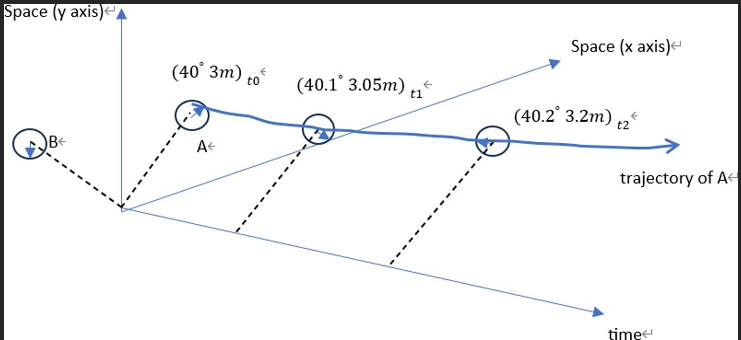
Fig1: Illustration of 2D Space vs Time Plot ( 0, r, t ) for real objects
(Trajectory A is a motion object and B is a stationary object. The arrow inside circle indicate doppler phase.)
V. Paradigm Shift: Micro-Power Spatial Intelligence
When you replace brute-force digital processing with mathematical elegance, the operational metrics shift entirely, changing the economics of commercial tech deployment: (Fig2) (Fig3)
- Micro-Power Spatial Sensing: This mathematical shift slashes active power consumption from the standard 50mA–100mA down to an unprecedented 3mA, enabling true multi-year battery lifespans on standard cells.
- Extended Range, Ultra-Precision: It achieves 1cm-level location precision and high-resolution trajectory tracking across a massive 20-meter range—all without a single camera lens or privacy compromise.
- Autonomous Energy Optimization: Sensors calculate high-integrity data locally, reporting precise coordinates to the IoT network to dynamically track human position. Entire office floors can adjust energy footprints precisely around occupied zones, completely eliminating standby waste.
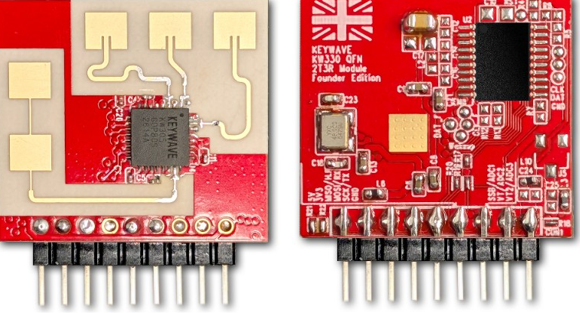
Fig2: Keywave Technology Unveils a 24GHz Radar SoC Breakthrough
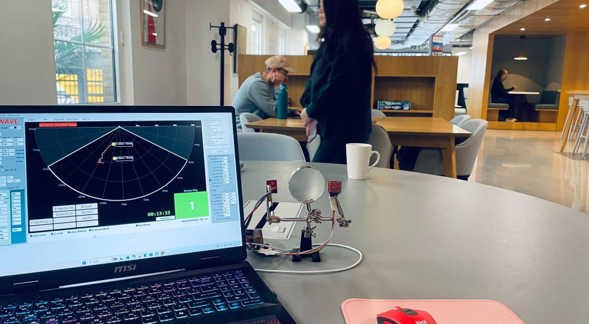
Fig3: Keywave Technology kw307 real demo
VI. Conclusion: The Building Blocks of the Future
The future of Edge AI cannot be sustained by simply throwing more battery power or cloud bandwidth at the problem. It requires high-integrity data delivered via hardware-native efficiency. By embedding advanced physics and elegant mathematics directly into silicon, the UK technology sector has an opportunity to lead the global transition toward truly autonomous, secure, and energy-efficient smart environments.
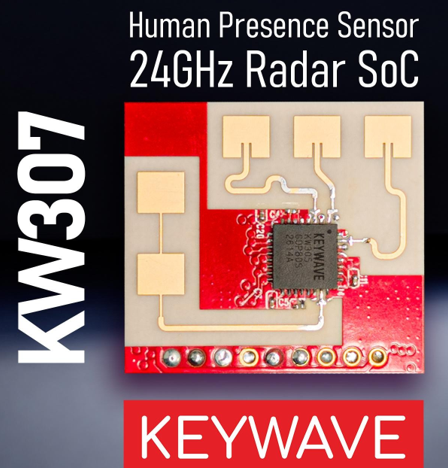
Note: Keywave Technology (Brighton, UK) is pioneering this space with its hardware-native Trajectory Intelligence architectures, proving that the solution to the Edge AI power crisis is, ultimately, "all in the maths."
Reference: