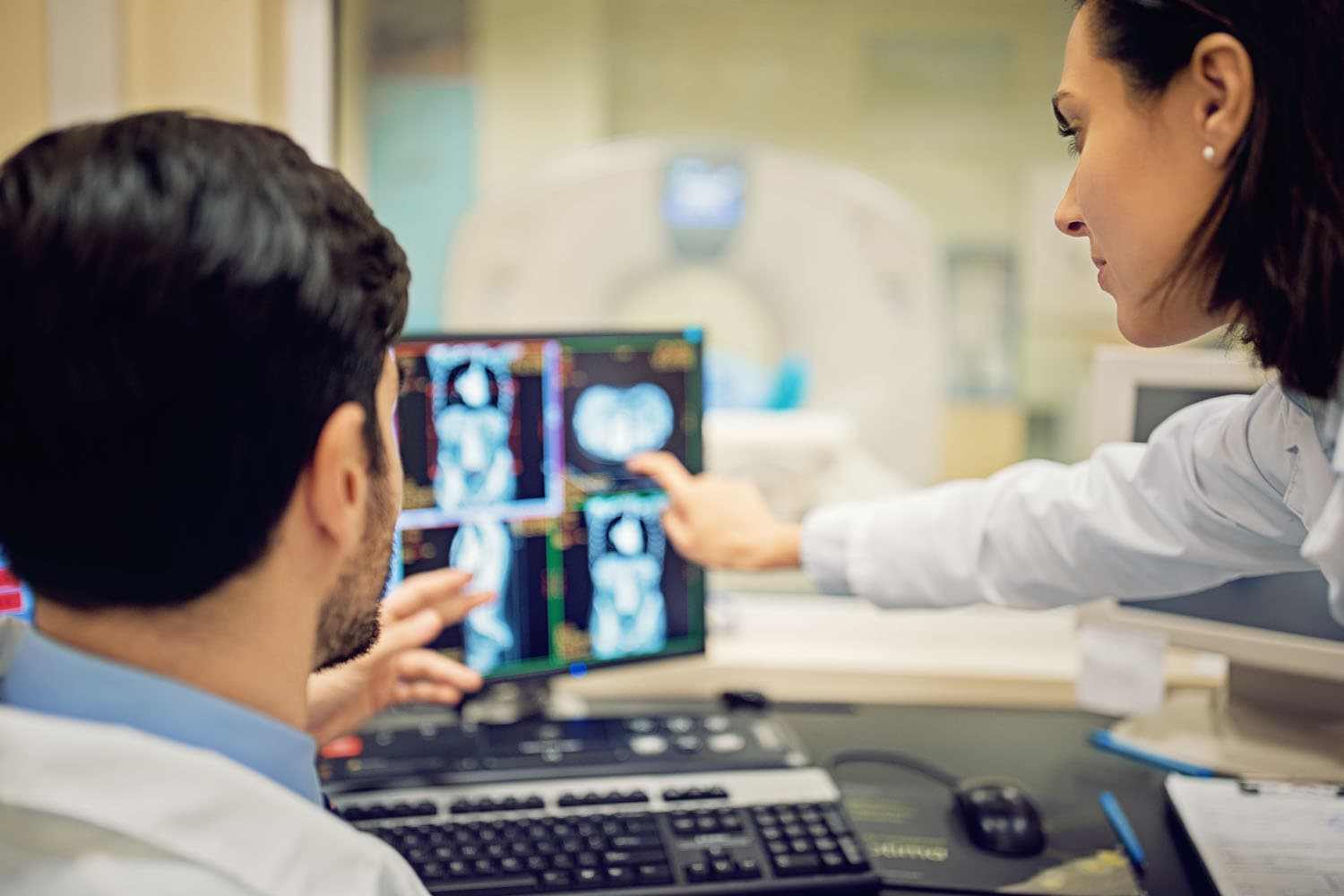
How digital pathology and AI could speed up cancer diagnosis. Exponential-e's Afshin Attari on the opportunity, and the barriers to adoption.
This is a guest blog by Afshin Attari, Senior Director of Public Sector at Exponential-e
The NHS is under growing pressure to deliver faster cancer diagnoses while managing increasing demand and a constrained pathology workforce. Digital pathology, underpinned by secure cloud infrastructure and artificial intelligence (AI), presents an opportunity to modernise these workflows. More than a technology upgrade, it offers a practical route to improving productivity, strengthening clinical collaboration and delivering better outcomes for patients.
The case for digitisation
Until recently, glass slides were physically transported to laboratories, slowing down workflows and leaving little room for collaboration across regions. In contrast, digital pathology enables images to be scanned, shared and analysed at speed, creating the conditions for AI tools to add value.
Centralising these images in secure sovereign cloud platforms creates an accessible “data lake” for pathologists across the country. For a workforce under pressure, virtual, real-time access to colleagues and second opinions can reduce professional isolation and ensure patients are not disadvantaged by geography.
AI as a conduit
The greatest concern among clinicians is whether AI is a threat to jobs. Far from replacing human expertise, AI can be a powerful supplement, helping pathologists work more efficiently and with greater confidence.
Algorithms are already capable of pattern recognition that flag cancerous tissue in minutes. While a human pathologist must still make the final call, AI can triage cases, highlight areas of concern and prioritise urgent slides in the diagnostic queue. This eases the burden on a stretched workforce and frees time for specialists to focus on complex cases where their skills are indispensable.
The benefits extend beyond the laboratory. Faster diagnosis means earlier treatment, improved survival rates, and reduced long term costs for the NHS. Avoiding delays also lessens the emotional toll on patients and families waiting anxiously for results.
Overcoming barriers to adoption
Despite clear potential, adoption of AI in pathology has been slow. One reason is cultural: the NHS is rightly risk-averse, and concerns about data security, governance and accountability are ever-present. Clinicians and executives alike need reassurance that patient information will be handled safely, and that AI tools will be used responsibly.
Another barrier is structural. Funding models in the NHS are often capital-intensive, designed for one-off infrastructure investments rather than ongoing “as-a-service” models. Yet digital pathology and AI are best delivered as cloud-based services, scalable across trusts and adaptable as technology evolves.
Finally, siloed ways of working have slowed progress. The NHS is a national service in name but fragmented in practice, with multiple trusts often duplicating effort. Wider adoption of digital pathology requires a coordinated approach, where successful pilots can be scaled nationally rather than confined to individual organisations.
Building a responsible AI framework
To succeed, digital pathology must be underpinned by robust governance. Responsible AI frameworks are essential to ensure accuracy, accountability and trust. This means:
Transparent validation of algorithms against clinical standards.
Secure data environments that comply with sovereignty and GDPR requirements.
Clear lines of responsibility if errors occur.
Continuous monitoring to identify bias or unintended consequences.
Embedding these safeguards will reassure both clinicians and patients that AI is a trustworthy partner, not a risky experiment.
Cultural change and collaboration
Technology alone will not deliver transformation. Engaging frontline staff in the design and deployment of AI is crucial to building trust and ensuring tools meet real world clinical need. Equally, patients must be involved in shaping how their data is used, with transparency about how AI supports their care.
Partnerships between the NHS and industry also play a vital role. Managed service providers bring expertise in secure infrastructure, cloud platforms and AI deployment that the NHS cannot be expected to develop in-house while focusing on patient care. By working together, these partnerships can bridge the skills gap and accelerate adoption.
A moment of opportunity
An ageing population, a retiring workforce, and growing cancer prevalence demand bold action. Simply digitising existing workflows will not be enough. The opportunity is to reimagine pathways where digital pathology and AI are embedded at the core, enabling faster diagnoses, smarter allocation of resources, and ultimately better outcomes for patients.

Afshin Attari
Senior Director of Public Sector, Exponential-e
Afshin Attari
Senior Director of Public Sector, Exponential-e
techUK - Seizing the AI Opportunity
The UK is a global leader in AI innovation, development and adoption.
AI has the potential to boost UK GDP by £550 billion by 2035, making adoption an urgent economic priority. techUK and our members are committed to working with the Government to turn the AI Opportunities Action Plan into reality. Together we can ensure the UK seizes the opportunities presented by AI technology and continues to be a world leader in AI development.
Get involved: techUK runs a busy calendar of activities including events, reports, and insights to demonstrate some of the most significant AI opportunities for the UK. Our AI Hub is where you will find details of all upcoming activity. We also send a monthly AI newsletter which you can subscribe to here.
From intelligent automation and personalised marketing, to fraud detection and predictive analytics, AI has become a strategic enabler of business growth and innovation across industries.
Sign-up to our monthly newsletter to get the latest updates and opportunities from our AI and Data Analytics Programme straight to your inbox.
Contact the team
Kir Nuthi
Head of AI and Data, techUK
Kir Nuthi
Head of AI and Data, techUK
Kir Nuthi is the Head of AI and Data at techUK.
She holds over seven years of Government Affairs and Tech Policy experience in the US and UK. Kir previously headed up the regulatory portfolio at a UK advocacy group for tech startups and held various public affairs in US tech policy. All involved policy research and campaigns on competition, artificial intelligence, access to data, and pro-innovation regulation.
Kir has an MSc in International Public Policy from University College London and a BA in both Political Science (International Relations) and Economics from the University of California San Diego.
Outside of techUK, you are likely to find her attempting studies at art galleries, attempting an elusive headstand at yoga, mending and binding books, or chasing her dog Maya around South London's many parks.
Usman joined techUK in January 2024 as Programme Manager for Artificial Intelligence.
He leads techUK’s AI Adoption programme, supporting members of all sizes and sectors in adopting AI at scale. His work involves identifying barriers to adoption, exploring solutions, and helping to unlock AI’s transformative potential, particularly its benefits for people, the economy, society, and the planet. He is also committed to advancing the UK’s AI sector and ensuring the UK remains a global leader in AI by working closely with techUK members, the UK Government, regulators, and devolved and local authorities.
Since joining techUK, Usman has delivered a regular drumbeat of activity to engage members and advance techUK's AI programme. This has included two campaign weeks, the creation of the AI Adoption Hub (now the AI Hub), the AI Leader's Event Series, the Putting AI into Action webinar series and the Industrial AI sprint campaign.
Before joining techUK, Usman worked as a policy, regulatory and government/public affairs professional in the advertising sector. He has also worked in sales, marketing, and FinTech.
Usman holds an MSc from the London School of Economics and Political Science (LSE), a GDL and LLB from BPP Law School, and a BA from Queen Mary University of London.
When he isn’t working, Usman enjoys spending time with his family and friends. He also has a keen interest in running, reading and travelling.
Sue leads techUK's Technology and Innovation work. This includes work programmes on AI, Cloud, Data, Quantum, Semiconductors, Digital ID and Digital ethics as well as emerging and transformative technologies and innovation policy. In 2025, Sue was honoured with an Order of the British Empire (OBE) for services to the Technology Industry in the New Year Honours List. She has also been recognised as one of the most influential people in UK tech by Computer Weekly's UKtech50 Longlist and was inducted into the Computer Weekly Most Influential Women in UK Tech Hall of Fame.
A key influencer in driving forward the tech agenda in the UK, in December 2025 Sue was appointed to the UK Government’s Women in Tech Taskforce by the Technology Secretary of State. She also sits on the UK Government’s Smart Data Council, Satellite Applications Catapult Advisory Group, Bank of England’s AI Consortium and BSI’s Digital Strategic Advisory Group. Previously, Sue was a member of the Independent Future of Compute Review and co-chaired the National Data Strategy Forum. As well as being recognised in the UK's Big Data 100 and the Global Top 100 Data Visionaries in 2020, Sue has been shortlisted for the Milton Keynes Women Leaders Awards and has been a judge for the Loebner Prize in AI, the UK Tech 50 and annual UK Cloud Awards. She is a regular industry speaker on issues including AI ethics, data protection and cyber security.
Prior to joining techUK in January 2015, Sue was responsible for Symantec's Government Relations in the UK and Ireland. Before that, Sue was senior policy advisor at the Confederation of British Industry (CBI). Sue has an BA degree on History and American Studies from Leeds University and a Master’s Degree in International Relations and Diplomacy from the University of Birmingham. Sue is a keen sportswoman and in 2016 achieved a lifelong ambition to swim the English Channel.
Visit our AI Hub - the home of all our AI content:
Enquire about membership:
Become a techUK member
Our members develop strong networks, build meaningful partnerships and grow their businesses as we all work together to create a thriving environment where industry, government and stakeholders come together to realise the positive outcomes tech can deliver.