techUK summary of the WTO Public Forum

Last week, techUK attended both the WTO Public Forum and the World Trade and Tech Day in Geneva. Below is a summary of what happened, what we got up to and what we heard.
What is the WTO Public Forum?
The WTO is the World Trade Organisation, an international body where over 160 member countries set basic rules and standards for global trade. 72 per cent of global trade in goods happens on terms negotiated at the WTO and many of the basic global rules for trade in services were also agreed at the WTO.
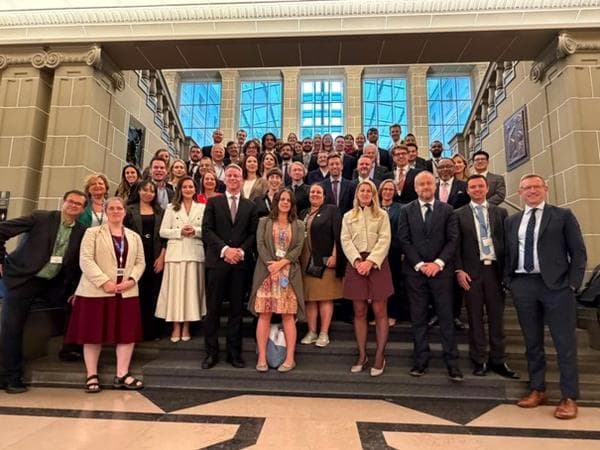
The WTO Public Forum is the organisation’s yearly public conference. This year was the largest ever, and there was a great deal of interest from government, academia and business in the Public Forum. We had more members signed up to attend than ever including Microsoft, AWS, IBM, Lenovo, BAE, BSI and Transform UK. All kinds of business associations also attended including the ICC, MakeUK, the FSB, the IPA and the BCC.
Official programme
World Trade and Tech Day
The Public Forum was preceded on Monday by World Trade and Tech Day, which this year focused on the influence of AI on trade.
Morning sessions saw interministerial discussions on how AI will change the trade landscape, as well as panels which included techUK members Lenovo and Altana.
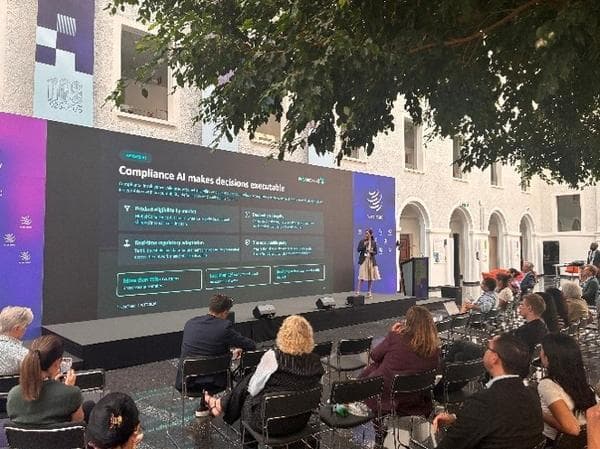
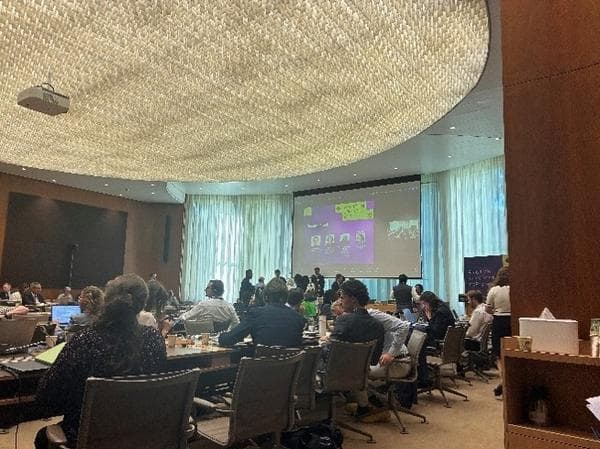
Lunchtime though was where attendees were given the chance to provide demos of how they were already using AI in trade. Lenovo and Altana, alongside a number of other companies and government bodies (including HMRC), gave presentations on how they are using AI solutions to make international trade easier and more secure today with a view to informing discussions at the WTO in the future.
The concluding panel, which included AWS, outlined how appropriate infrastructure needs to be in place in order to make the global AI trading system work for everyone, and that now the focus had to be on turning promises into reality. This is a sentiment the WTO Public Forum would echo.
WTO World Trade Report 2026
The WTO used the Public Forum to launch its World Trade Report, the WTO’s yearly policy report outlining trends in world trade.
The report was well summarised by the UK Ambassador Kumar Iyer CMG, who remarked the report shows what the WTO currently does for consumers, businesses and governments and that it is worth the efforts being undertaken to preserve it.
The report argues the WTO is a victim of its own success, that it has helped create global trading growth that it has failed to keep up with, especially as the majority of rules in services trade were agreed in the mid-1990s before the widespread use of the internet. The report also points out the WTO is operating in a more fraught geopolitical environment than when it was founded, with the return of industrial policy disruptive to global trading patterns. The report therefore highlights that the organisation needs to be reformed to keep pace with the advance of new technologies
This is a task that the report makes the case for, positioning the WTO as a foundation members should work to build on, rather than as an institution irrevocably lost. The report outlines the major achievements of the WTO including the fact that trade between WTO members has increased by 140%, that 72% of all global merchandise trade still takes place on the core most-favoured-nation (MFN) tariff terms; that tariffs have fallen by 35% in acceded member states since 2000.
On technology, the report recognises that tech is not just increasing the amount of products and data that is traded, but is increasingly changing the way trade is done. The report cites statistics claiming AI can increase global trade by 40% by 2040 and increase global GDP by more than 13% over the next 15 years.
The report also highlights that the WTO should address the increasing lack of interface between different economic models, as well as concerns different economic models create a non-level playing field for goods. However, not all the changes have been for the worse. The report also cites the opportunities for developing countries to take advantage of services trade, particularly in green services, to bring growth to their countries so long as the right rules are in place to do so.
The report, however, is largely focused on the present and the past, with few recommendations for what to do in the future beyond a very general call to adapt to the new world where possible, to preserve the value the WTO provides to its member states, and to find new opportunities for value where possible.
You can read the full report on the WTO website.
Other panels of note
The entire Public Forum was packed full of interesting events that are too numerous to mention. A couple worth picking out include:
A panel on the future of services trade on Tuesday 15 September, which included Microsoft.
A panel on the future of plurilateral agreements on Wednesday 16 September.
.
A panel on the future of green services hosted by the UK, Barbados and the Philippines, outlining how stable and open digital trading rules can reduce barriers to exporting green services for SMEs and for developing countries.
An IMF Panel on tax and digital services on 17 September, where the
IMF reviewed a paper they published
in July on taxing cross-border services, which showed that tariffs on e-commerce are expensive to administer in return for little gain.
What techUK attended
Ambassadorial and other key meetings
techUK attended meetings with several ambassadors and other key individuals in the WTO. These include:
Director General of the WTO Ngozi Okonjo-Iweala.
James Baxter, Australian Ambassador to the WTO
Kumar Iyer CMG, UK Ambassador to the WTO
Maria Martin-Prat, EU Ambassador to the WTO
Tan Hung Seng, Singaporean Ambassador to the WTO
Katsuro Nagai, Japanese Ambassador to the WTO
United States Trade Representative (USTR) representatives
We had high-level discussions on the plurilateral Agreement on E-Commerce (ECA), the multilateral moratorium on e-commerce and the future of digital services trade at the WTO.
techUK speaking engagements
techUK was invited to speak on numerous panels and roundtables throughout the week.
On Wednesday 16 September, Sabina spoke at a private UK Mission event on the E-Commerce Agreement in the morning, hosted by the UK Ambassador. Sabina also spoke at an ICC roundtable on how the EU and Comprehensive and Progressive Agreement for Trans-Pacific Partnership (CPTPP) can work together on services trade and two curated conversations centred around AI Governance in the international space.
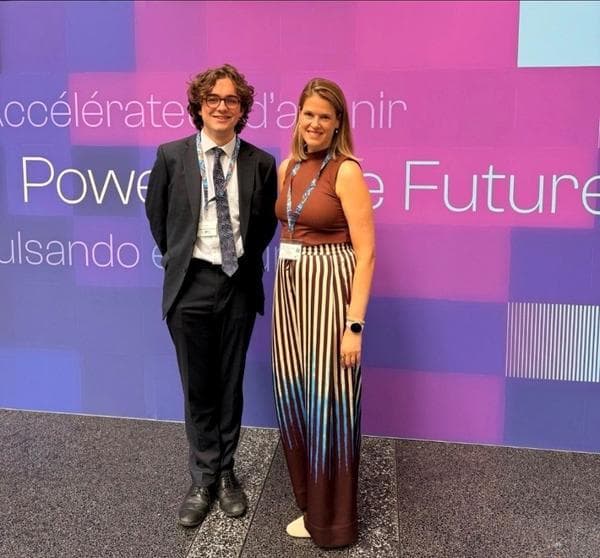
On Thursday 17 September, Sabina spoke on the panels: Powering the Future of Digital Services Trade and the Role of Services in Supply Chain Security. The latter panel will form an episode of the Borderlex Trade Bites podcast.
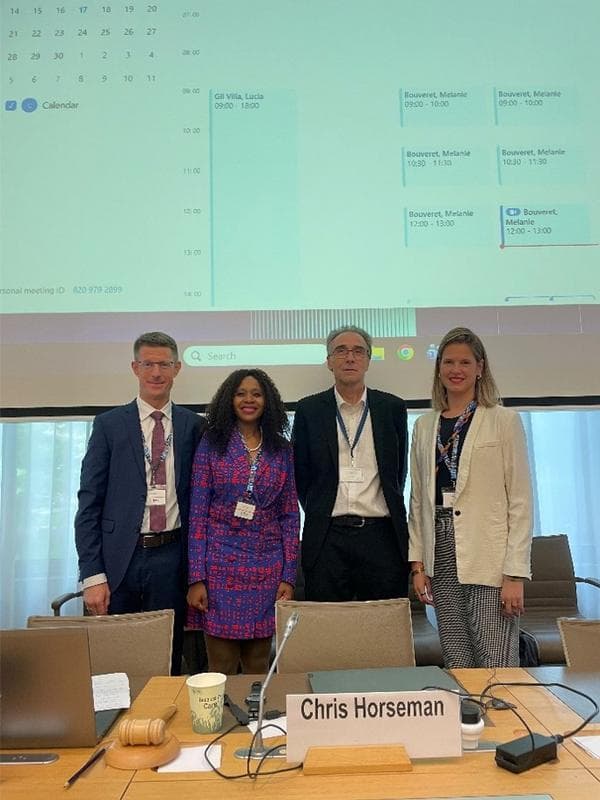
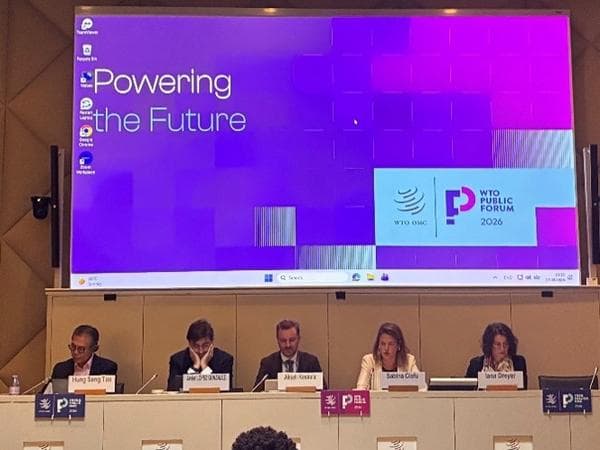
At these panels, techUK made the case for going further and faster on international digital trade. We pointed out that the WTO has great potential as a convening space for having those conversations and that members and the secretariat both need to work with the private sector to understand how best to facilitate tech trade in the future. We also urged the restoration of the multilateral e-commerce moratorium but argued that this shouldn’t hold back those countries who want to go further, particularly through interim implementation of the ECA.
WIPO briefing
techUK was also invited to a briefing at the World Intellectual Property Organisation to launch the ICC’s report ‘Intellectual Property in Action’, produced with CIPA and the IP Federation. There was also a wider briefing from the World Intellectual Property Organisation about WIPO’s work. This included briefs on the Global Innovation Index, which will see its 2026 edition launched on 29 September, and the work of the Arbitration and Mediation Centre, which has seen an increasing number of digital claims in the last few years and a willingness from governments to push companies away from domestic courts to mediation where possible. There was also a brief on the WIPO’s work on AI and IP, with the WIPO hosting a Global Forum on IP and AI in early November to discuss the evolution of the IP system.
Analysis
It is safe to say trade in services and technology trade are very high on the agenda at the WTO.
We heard a lot about the multilateral e-commerce moratorium, the global rule that prevented tariffs being placed on the flow of data. It lapsed at a WTO Ministerial in March at the eleventh hour, but since then a group of countries have agreed a plurinational moratorium in the aftermath of MC-14, agreed to by jurisdictions including the UK, US and EU, and to a permanent moratorium inside the ECA, a plurilateral agreement which lots of the main digital trading nations have signed. Some of those we met believe that the multilateral moratorium may be reinstated after the Brazilian election. But in case it cannot, the UK is part of a coalition of countries looking to solidify the ECA to act as a substitute, with a push towards interim implementation.
Remarks made throughout the week also suggested that the WTO and its member states are increasingly thinking about how AI trade will work, and their approach seems to be about preventing any distortive effects of AI-enabled trade, particularly regarding businesses and consumers in developing countries and their access to the technology, alongside fully enabling the growth opportunity provided by AI to make the international trading system work far better for businesses, governments and consumers. If done right, this has the potential to add significant value to the global economy.
However, the WTO needs to start by reimposing the multilateral moratorium on e-commerce and by supporting the ECA countries with their plurilateral agreement. This will set the foundations on which more detailed commitments on data and AI can be made, commitments which can bring serious benefits to the global economy. Once these foundations are in place, the WTO should then look at modernising and liberalising rules on data flows where possible and seeking agreement on wider e-commerce issues.
In summary, we found that the WTO isn’t dead. While there is an effort to preserve and rebuild measures like the multilateral moratorium on e-commerce, the WTO and many WTO members know the organisation needs to go forward as much as it can with new projects and new ways of working while protecting what continues to work. To do this, the WTO and its members need to work closely with businesses and better reflect the needs of a modern digital services sector. The WTO should also support countries willing to go further on e-commerce, including those willing to agree and enforce new rules amongst themselves, with the resources and convening space that they need to do so through the WTO Secretariat.
We found the conversation on digital and services trade reform is a conversation that is very much happening right now, hence why the WTO decided to focus so heavily on services and AI for the week of the Public Forum, and we believe the WTO and member states have been emboldened by business interest in the Public Forum and are therefore now more receptive to future business engagement on new international trading rules for services and digital trade.
For the UK, there is a real opportunity if it continues to provide a strong leadership role at the WTO on services trade and digital trade, and we call on the UK government to recognise this and prioritise the WTO as a place where it can make real strategic gains. The UK’s status as a respected diplomatic convenor, a majority-services exporter, and as home to the world’s third largest tech sector, gives it an ideal foundation on which to convene and push forward substantial measures to improve digital and services trade. This includes measures to ease data flows across borders, action to ensure greater regulatory interoperability between different regulatory frameworks, and measures that will ensure SMEs can more easily export through transparent, open trading rules. Leadership at the WTO will also help the UK negotiate with key diplomatic partners through long-term relationships built not in capital but in Geneva. The UK is already taking on that leadership role with the ECA, and the Ambassador’s presence at the WTO World Trade Report 2026 launch suggests the UK Mission’s opinion is respected, so the UK government should not squander this opportunity and instead commit to continuing the UK’s leadership role at the WTO.
The potential benefits on offer for a WTO-based agreement on digital technology and services trade are enormous. The OECD claimed we are currently at around 8% global digital integration now in e-commerce trade, and even the basic ECA will increase this by 21%, with every percentage point removing cost and knowledge barriers to business and creating opportunities for growth. This is why the UK should continue to lead and to work with other countries who want to move ahead with the services and digital trade agenda. It is also why we as techUK will remain at the centre of the conversation to ensure future agreements best reflect the needs of techUK members and the UK tech sector.
What comes next
We will be following on by deepening our ties with those we met at the Public Forum, which has also helped us remain an integrated part of the UK trade policy community. We will also be looking at how the WTO conversation evolves and providing our own voice to conversations.
techUK thanks the UK Mission in Geneva, the Coalition of Services Industries, the European Services Forum and ICC UK for inviting us to their events.
If you have any questions about our Public Forum engagement, our broader WTO and trade policy work, please contact archie.breare@techuk.org and sabina.ciofu@techuk.org