Chancellor's first major speech: What does it mean for tech?

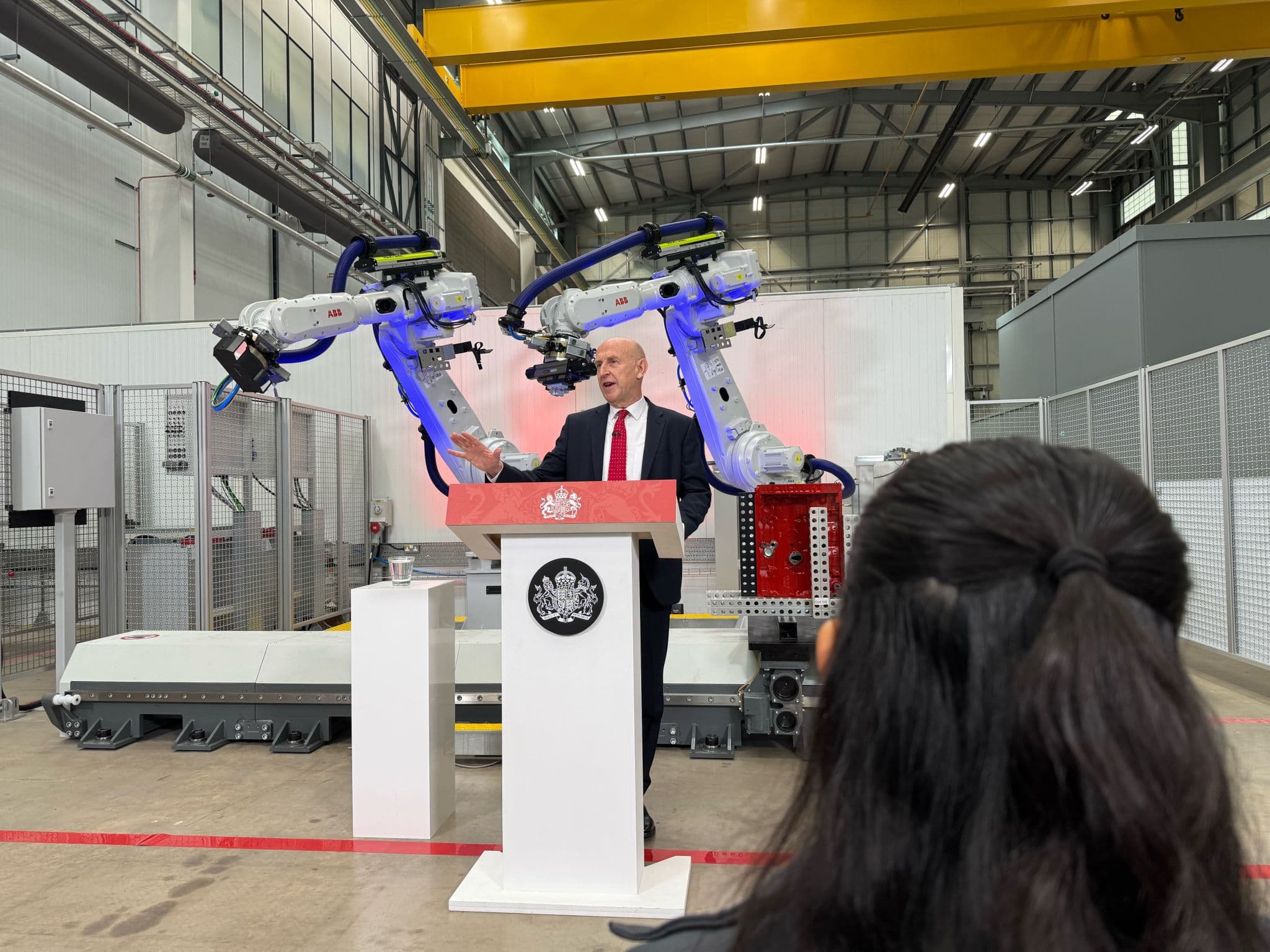
In his speech, the Chancellor set out the first details of his economic strategy and the Government's approach to generating economic growth. It was John Healey's first major speech since taking over at HM Treasury, and the Chancellor was keen to stress his commitment to fiscal discipline, whilst identifying investment, innovation and the workforce as the three drivers of growth. Below is what matters most for tech.
The state as an early first customer
The Chancellor set an ambition to double the number of UK unicorn firms and committed to working with the Business Secretary to identify the next wave of firms, using "the state as an early first customer" to ensure they have the backing to scale. He cited his own record at the Ministry of Defence, the Sovereign AI scheme, and a newly announced £150m northern scale-up fund as evidence of government’s ambition. Although increasing the number of UK unicorns is an eye-catching target, a better success metric for the government would perhaps be the share of unicorns that stay and eventually list in the UK.
On procurement, the Chancellor was explicit about using it as a strategic tool to back British firms across more of the public sector, alongside a broader commitment to buy British goods. This risks cutting both ways. On the one hand, public procurement can be a powerful lever to support innovative firms, shape markets and develop strategic capabilities in the UK. On the other hand, strict nationality tests in the UK’s public procurement processes risk imposing costs on businesses, narrowing markets and weakening the UK’s competitive position.
Cross-economy sandboxing now has a due date
The Chancellor also appears to have recommitted to cross-economy sandboxing powers, this time committing to have them ready to deploy by 2027. The stated aim is to allow businesses to safely test frontier technologies that regulation prevents - think robots, drones, and medical treatments.
This is not a new proposal. It follows in the footsteps of the late 2025 AI Growth Labs proposal and the statutory sandboxing power set out in the Regulating for Growth Bill proposed at the King’s Speech. techUK is excited to see more push towards delivering on this promise, and to expanding it beyond AI. We have long called for regulatory clarity and agile, pro-growth regulation that addresses regulatory barriers to innovation without defaulting to new technology-specific rules.
What was novel and exciting to industry from both the Growth Labs and the Regulating for Growth Bill was the statutory nature of the sandboxes - a legal mechanism that allows for the temporary suspension of specific rules to facilitate live-market trials in high-growth sectors. The speech does not say whether the powers will carry that force. Until Government confirms whether the power is advisory or statutory, the commitment cannot be assessed.
The UK has an internationally recognised track record in sandboxing, but not all sandboxes have proven equally effective. Such a power needs to engage with both the cross-cutting barriers that affect adoption across the economy, and the narrow, sector-specific rules. Sandboxing also needs to do so with clear eligibility criteria, meaningful regulator engagement and a genuine pathway for successful trials to become permanent.
Done well, we firmly believe a power like the Chancellor proposes could accelerate innovation, attract investment and reinforce the UK's global competitiveness, without compromising the strong consumer protections that underpin public trust.
AI is the test case for the innovation driver of growth
Th Chancellor gave AI more space than any other example under his innovation “growth driver”, calling it “one of the greatest innovations in a generation”. His tone around AI was notably different to his predecessor’s. Where Rachel Reeves committed to making the UK the fastest adopter of AI in the G7, John Healey paired that ambition with the condition of ensuring it had balanced oversight.
The case he made for AI’s significance was economic, describing it as able to reach every level of the economy: every firm, community, hospital, and school. He argued that AI’s ability to self-improve, with frontier model capabilities doubling every four months, was what made it different from the steam engine, electricity, and the internet. It’s that compounding return that makes it central to the innovation and growth agenda.
He also then turned to the potential costs the UK has to keep top of mind, be the potential risks to space, resources, national security, or business cybersecurity. He acknowledged that it is likely to affect the labour market, but that no one, even economists, understand fully how and in what direction. But by turning the costs, he did not shy away from them. He pivoted, stating the potential costs as a place that the UK can credibly intervene to ensure it takes forward responsible AI-enabled economic growth, citing the AI Security Institute, AI Economics Institute, and Cabinet-Level Minister as key government interventions.
This is not a chancellor cautioning against AI, but focusing on concrete steps to harness the opportunity. This is best described by his pledge: “As Chancellor, I will not let this opportunity of AI pass Britain by, but nor will I, allow this technology to proceed with no oversight”.
How the Treasury decides where to invest is changing
The Chancellor announced that the Green Book discount rate, HMT’s guidance for appraising the value of public spending decisions across government, will fall from 3.5 per cent to 3 per cent. A lower rate means projects with longer-term benefits score more favourably in appraisal, ensuring that projects with long-term potential are appraised accordingly. The government’s investment decisions will also include analysis on economic potential, to assess places on what they could become rather than what they are today. Public Financial Institutions (such as the British Business Bank and National Wealth Fund, amongst others), already backed by £200 billion, will be aligned more tightly with government priorities.
Long-life digital infrastructure has often struggled against Treasury guidance built for shorter payback periods, so a lower discount rate genuinely helps.
Regulation, the courts and the consultation culture
The Chancellor also announced that judicial review reform would be extended from energy projects to all major infrastructure, to reduce the meritless legal challenges blocking economic growth. The judicial review extension matters directly for data centres and networks, where the risk of being challenged has become a real deterrent to committing capital. The government will also crackdown on “consultation culture” where it creates delays in holding back growth and investment, by encouraging government departments to find quicker, more effective ways of gathering input from the public and industry when developing policy.
The Chancellor and the Business Secretary will convene the major regulators this autumn, ahead of the 2027 Spending Review, to identify where they hold British business back.
Devolution, and where growth is meant to happen
The Chancellor confirmed that he will use the upcoming Autumn Budget to set out a roadmap to fiscal devolution, with greater business rates retention for councils and strategic authorities and central government grants replaced by a share of local income tax for every Mayoral Strategic Authority from 2028.
Alongside this, he announced that the British Business Bank will commit £150m to a new northern scale-up fund and a ‘Northern 500’ Initiative which will bring together the region's most ambitious mid-sized businesses into a growth community led by the Great North partnership of Mayors, with private sectoral and central government backing. Local investment pipelines will be further built and supported as South Yorkshire, Liverpool City Region, North East England and Cardiff Capital Region join the National Wealth Fund as strategic partners.
What techUK asked the Chancellor
techUK CEO Julian David OBE asked the Chancellor what specifically the Government will do to support SMEs to adopt new technologies, including AI.
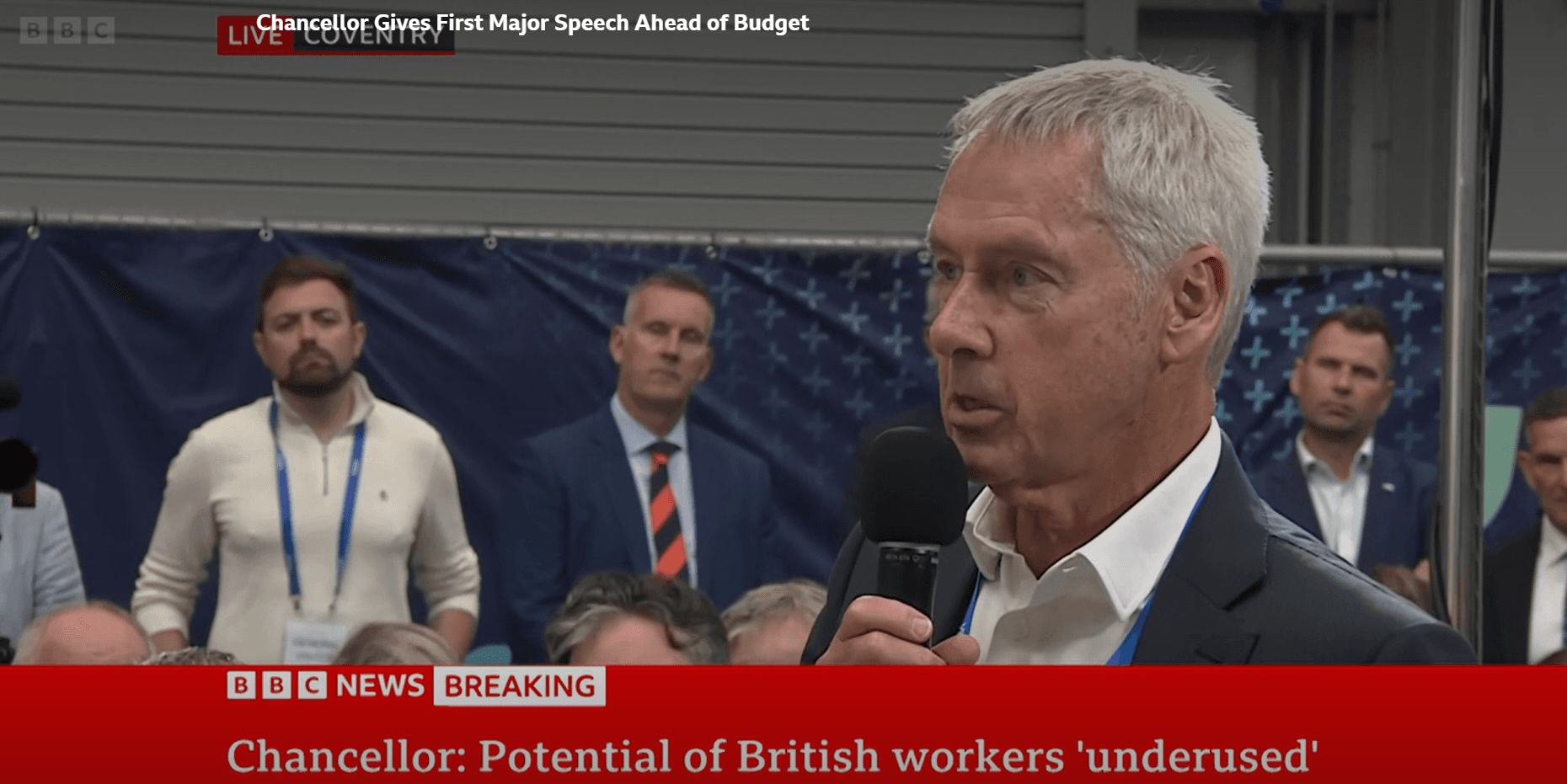
The Chancellor's answer had four parts. He said that it is essential for the public and private sectors to work together; the government cannot deliver a nationwide push on AI adoption without industry. He pointed to a national AI skills programme with nearly £200 million behind it. He referred to last week’s Sovereign AI R&D Procurement Scheme, opening four public sector competitions to British AI firms. And he emphasised the need for businesses to trust the technology, linking adoption directly to business confidence to invest.
Towards the Autumn Budget
With all eyes now looking ahead to the Autumn Budget on 28 October, techUK will be working hard to push the government for more action on the areas that matter most to our members. This includes harnessing technology to strategically reindustrialise Britain, building the workforce of the future, keeping the UK at the forefront of innovation, building a smarter state, bolstering the UK’s sovereignty, security, and long-term resilience, and unlocking enterprise.
Specifically, we will call for further action on lowing the cost of energy - a huge barrier to British industry and digital infrastructure that, whilst mentioned in passing, was largely overlooked in the speech. techUK is calling on the government to take action towards lowering bills by reforming energy levies, moving them into general taxation by 2029.
Likewise, whilst addressing the rising numbers of youth unemployment and economic inactivity and noting that the potential of British workers was ‘underused’, the Chancellor did not mention employer National Insurance Contributions (NICs) once in his speech, despite this being one of the largest additional costs that businesses have borne in previous years. techUK will also use our submission to the Autumn Budget to urge the government to take targeted action on bringing down the cost of hiring.
Further recommendations will include targeted support for tech adoption across the industrial supply chain, accelerated reforms to the Growth and Skills Levy, and support for cyber resilience across the economy.
Responding to the Chancellor's speech, techUK CEO Julian David OBE said:
“The Chancellor has set out the first details of his economic strategy. Technology is a key driver of growth and productivity, so it is encouraging that this speech recognises the importance of tech and innovation in driving sustainable, long-term growth, including for SMEs.
Next month’s Autumn Budget will be a key test to turn these warm words into concrete actions, build business confidence, and put in place the conditions for the tech sector to invest, expand and hire in the UK.”
Please contact Ed if you have any questions: