Driving value for car manufacturers with private 5G networks
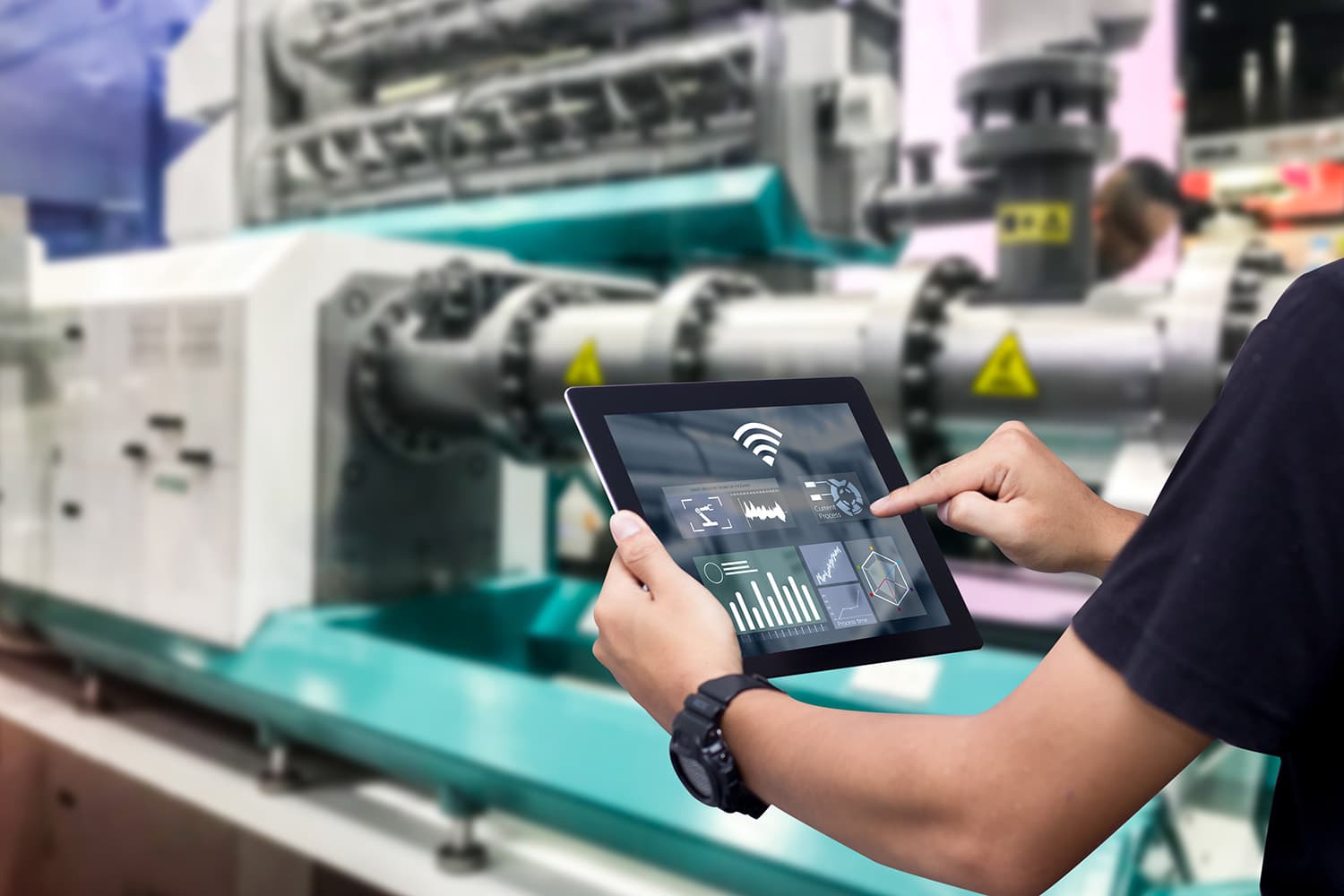
There is no denying that data is the vital fluid that fuels modern car manufacturing. From automated robots to AR-enriched quality control procedures, the seamless communication of data is entrenched in the foundations of these emerging technologies. This is why so many manufacturers are building their new business models on the back of Private 5G Networks. Three interrelated car production ambitions can be grasped with Private 5G networks; Sustainability, Flexibility and Deeper Cyber Security. In this brief guide, we’ll look at what makes a Private 5G network an OEM’s best friend as it finds it way amidst the fourth industrial revolution.
Sustainability
Many carmakers are struggling to meet the ambitious net-zero targets set by the industry, governments and consumers. Sustainable manufacturing practices are an absolute priority. The EU had set the target for OEMs to cut their CO2 emissions by almost 40% by 2030. This means that entire production processes must be re-evaluated and monitored more closely.
Private 5G can remedy this to a great extent by carrying the IoT ecosystem that can offer real-time monitoring, abatement and offset detection capabilities. Combining secure connectivity with the ability to host up to a million devices within a square kilometre, environmental sensors can be embedded deeper throughout the production line.
From sensors that can monitor the corrosion levels of machinery, to sensors that can measure the toxicity of water discharge during the paint process, car Manufacturers can keep a rigorous eye on their production lines, with insights that can help them to analyse their performance for a broader range of sustainability metrics.
Of course, greater transparency within the production practice is just one of the coexistent paths to becoming greener. Need I discuss at length the arrival of Electric cars soon into the mainstream.
Flexibility
The car industry is changing. More and more car companies are embracing the global efforts to become greener by diverting towards the production of electric vehicles. Pairing this with the global trend of deeper customer personalisation, OEMs really can’t justify rigid, heavily standardised production lines.
With a Private 5G network, the assembly lines, the machines and the robots involved can all be connected wirelessly. This offers a huge boost to the malleability of OEM assembly practices. With a broader product range on the horizon for many, assembly lines can only cope if they are easily reconfigurable.
For OEMs this fluidity means everything. The ability to expand the product range without the worry of factory downtime will ensure greater production capacity utilisation, saving millions before long.
Security
So, now we have an OEM with a seamless changeover process and an IoT-enhanced understanding of where offsetting and other environmental detriments could be occurring within the manufacturing plant. A modern manufacturing practice ready to take on the challenges of the coming decades. But this is all built on a mountain of data. Millions of messages are going to need to be communicated to one another all the time. So how can we ensure that this data is sent and managed securely? A private 5G Network, of course. The data is transmitted only over the sites own dedicated private network, instead of being transmitted over the public networks, offering them complete data sovereignty.
Car manufacturing has long been a pioneer within the wider manufacturing landscape. From Fordism to JIT (Just In Time), these revolutionary innovations, forged in the pursuit of efficiency and greater products, have cascaded into other industries. So, watch closely, as the car industry continues to reshape the manufacturing environment over the coming decades.
Guest blog by: Louis Tomlinson, an IoT and Smart Technologies expert at CGI. Follow CGI on Twitter and LinkedIn.
To read more from the Future Private Networks campaign week check out our landing page here.