AI's biggest public sector opportunity isn't productivity. It's completion.

Across government, AI pilots are proving what's possible.
From improving internal processes to enhancing citizen-facing services, organisations across the public sector are exploring how artificial intelligence can help deliver better outcomes with limited resources. This experimentation has been essential. Pilots help teams understand risk and identify where AI can genuinely add value.
But as AI adoption matures, the conversation needs to evolve.
The next challenge is not launching more pilots. It is identifying which use cases should scale, and how success should be measured.
Much of today's discussion focuses on productivity. How can staff save time? How can organisations automate routine tasks? How can teams manage growing demand more efficiently?
These are important questions. However, they risk overlooking a challenge that has existed long before AI entered the conversation.
Government departments often measure the success of digital transformation by what they've made available online. Citizens measure success by how quickly and easily they complete their task.
Over the last decade, governments have invested heavily in digital services, making information, forms and transactions increasingly accessible online. Yet access alone does not guarantee success.
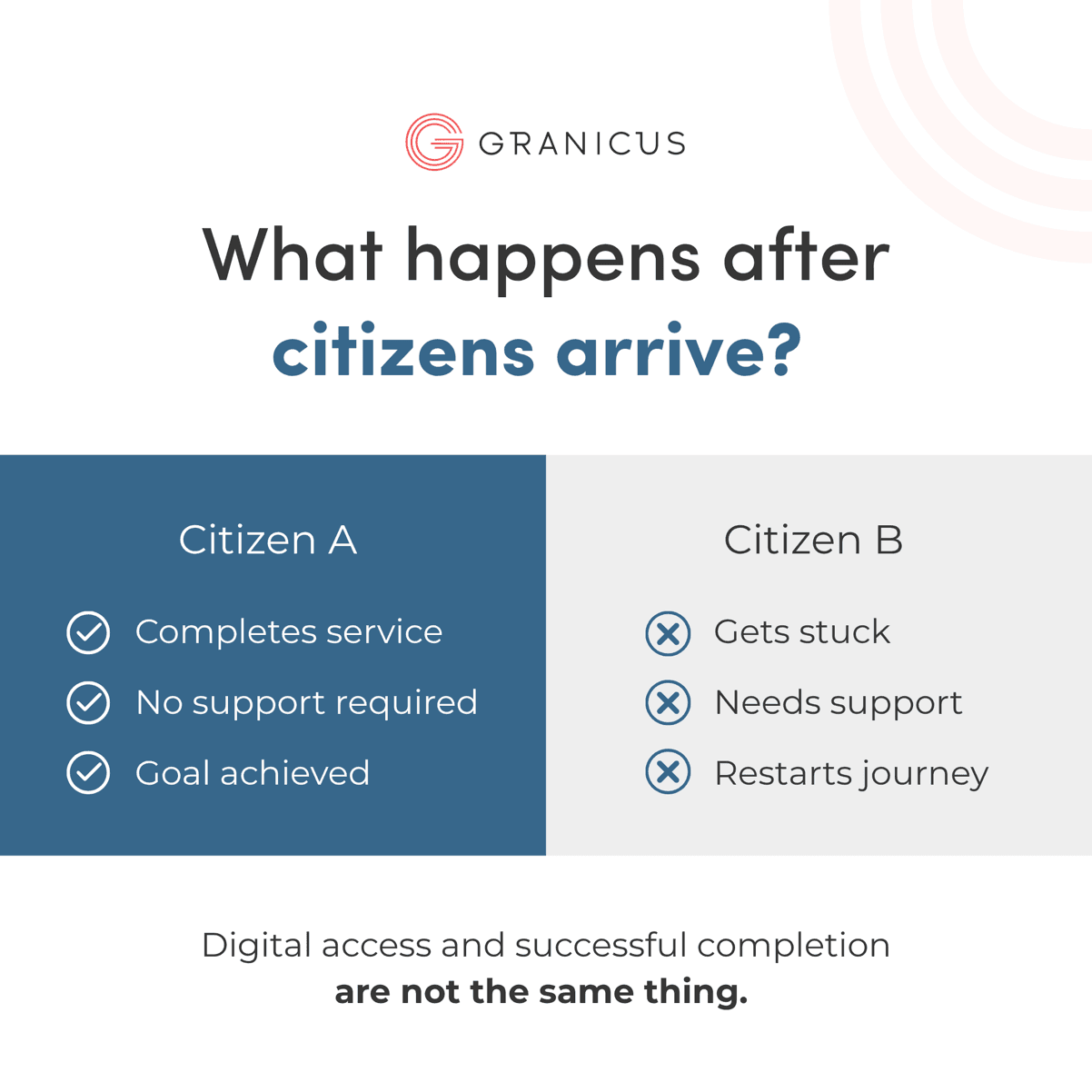
A citizen may arrive at the right website, start the right process and still fail to achieve their goal. They may become confused, abandon a journey, seek support or restart the process altogether.
This distinction matters because digital access and successful completion are not the same thing.
People do not think in departmental structures. They arrive with a need. They want to apply, report, request, renew, book or access support.
The greatest opportunity for AI is helping them do exactly that.
Rather than simply surfacing information, AI can help users navigate complex services, understand requirements and receive guidance that’s relevant to their circumstances. In doing so, AI helps reduce friction in the moments that matter most, turning intention into action.
This creates value for citizens and organisations. When more people successfully complete services through self-service channels, fewer people need additional support.
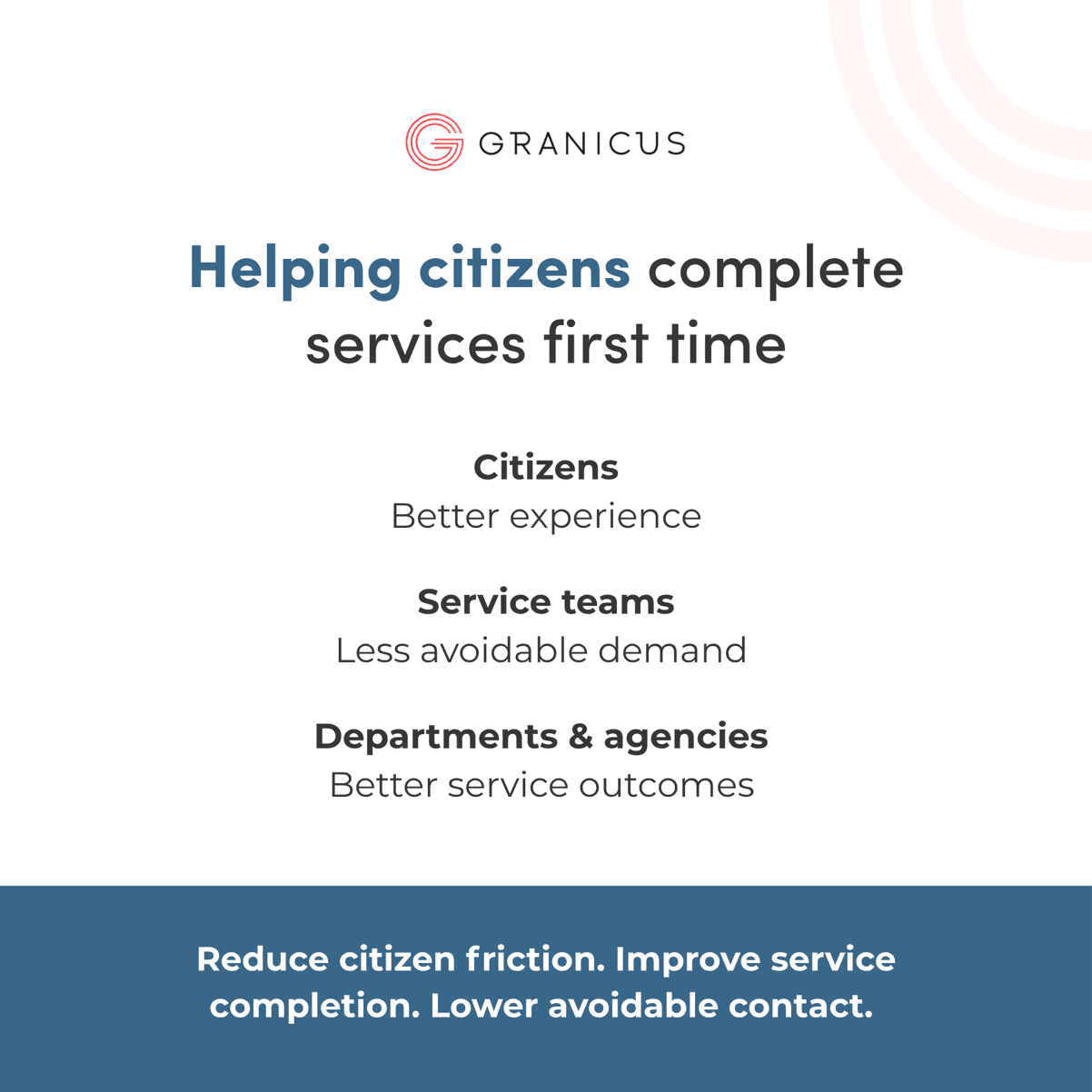
The benefits extend far beyond efficiency gains.
Citizens receive a better experience. Service teams spend less time dealing with avoidable enquiries and more time supporting complex cases, while departments achieve better outcomes from limited resources.
This is where industry can play a critical role in supporting government's pilot-and-scale approach.
The most successful AI deployments will be those that solve real problems, demonstrate measurable outcomes and scale confidently across services. Industry partners can help identify high-impact opportunities, establish meaningful success metrics and share lessons learned from proven implementations.
However, scaling AI successfully requires government and industry to measure the right things.
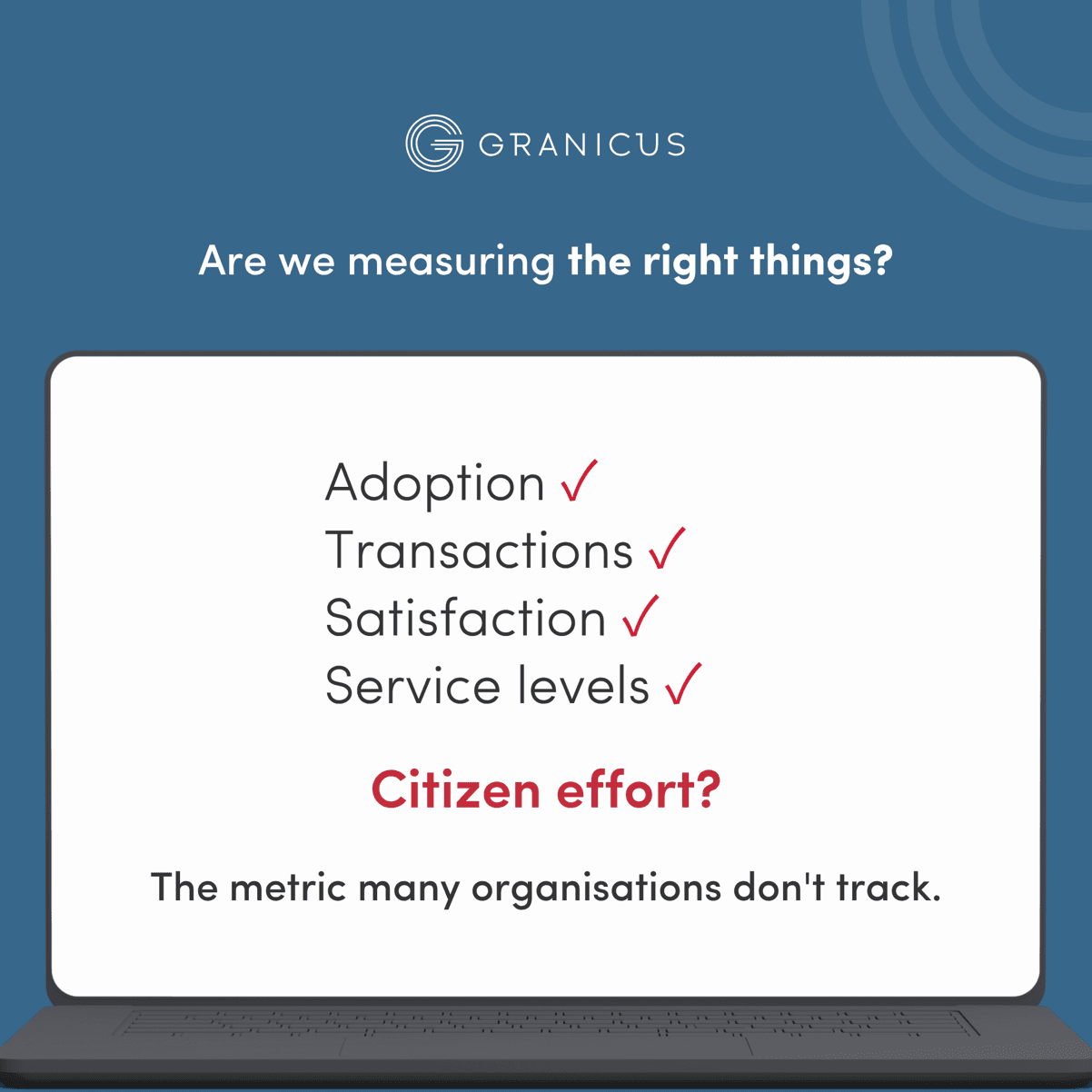
Organisations already track adoption, transactions, satisfaction and service levels. Yet one critical measure often receives less attention: citizen effort.
How easy was it for someone to achieve their goal? How many times did they need to search for help, restart a process or seek support before finding a resolution?
As AI moves from experimentation to implementation, reducing citizen effort should become a key measure of success. If AI helps people navigate services more easily, complete tasks more confidently and achieve their objectives more quickly, it is creating tangible value for both citizens and the organisations serving them.
The future of AI in government should not be measured by the number of pilots launched, but by the outcomes delivered. The greatest opportunity lies in helping people successfully complete the tasks that matter to them. When AI is embedded into the citizen journey, it becomes more than a technology initiative. It becomes a tool for creating more accessible, efficient and responsive public services.