AI-powered Acoustic Intelligence: The Future of Counter-UAS
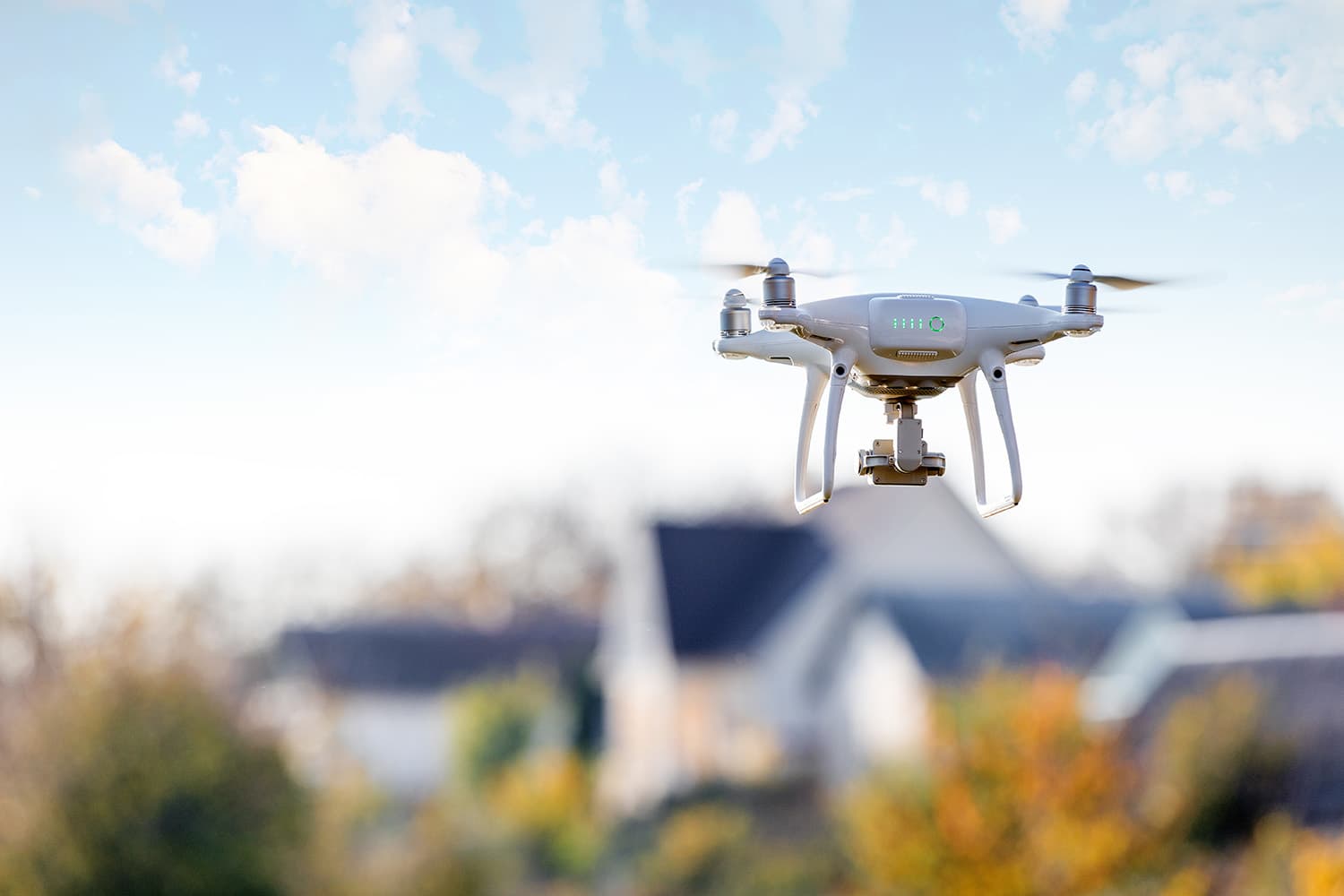
Once the stuff of science fiction, the war in Ukraine has provided a stark demonstration of how drone warfare is presently a very real and deadly phenomenon, now responsible for 60% of targets destroyed in the conflict. UAS are being deployed in unprecedented numbers to conduct reconnaissance, strike targets, and establish superiority on the battlefield.
As the war has become more attritional and prolonged, these systems have become more sophisticated, prevalent, and varied, and their importance to both sides has grown exponentially. Both Ukraine and Russia have ramped up production to be able to produce as many as 4 million drones every year, and their use has evolved from “performing specialised functions to becoming one of the most important and widely used weapons on the battlefield.”
Just as developing, manufacturing, and deploying UAS have become key facets of military strategy, so have Counter-Unmanned Aerial Systems (C-UAS) methodologies. These are the techniques and tools that armed forces use to detect and neutralise unmanned systems. One of the most effective of these methodologies is acoustic detection.
Acoustic Detection for Counter-UAS
Acoustic Detection involves identifying, tracking, and classifying drones based on the unique acoustic signatures that every UAS generates. It does this by using microphones to detect the unique signature of sound waves generated by the hum of motors or the buzzing of propellers on drones.
Acoustic detection has several key advantages that distinguish it from other C-UAS methods. First and foremost, it enables operators to identify threats beyond their line of sight where physical obstacles (trees, hills, buildings, etc.) or adverse weather conditions (clouds, fog) obscure their vision.
Secondly, acoustic detection proves effective against threats that are immune to RF detection, such as fibre-optic drones. This is a critical advantage as these drones have become increasingly common and deadly in the Ukraine-Russia war.
Its adaptability to various environments, including contested and cluttered areas, further solidifies its effectiveness. Finally, it offers a cost-effective solution compared to more expensive systems, like radar.
However, detection using acoustic signatures comes with three principal challenges. The first is environmental complexity. Sounds vary in intensity, propagate in non-linear pathways, and are affected by numerous factors, including weather, temperature, and varying terrain. Sounds also arrive from all directions, near and far, and the resulting signals detected by any sensor are a combination of many different sources.
The second problem is cognitive load. The environments in which C-UAS is necessary are often stressful, high-stakes, and require rapid decision-making. Adding massive volumes of data, each with differing formats and levels of relevance, compounds this problem. Instead of aiding the operator, poorly designed systems can inadvertently overload them, increasing the likelihood of errors or delays in critical moments.
The third problem is evolving threats. Drone technology has become drastically more sophisticated and varied in recent years. It is estimated that the Ukrainian military uses about 100 different types of drones, ranging from toy-sized systems to models with wingspans of almost 20 meters. Against a backdrop of increasing numbers of UAS and as airspace becomes more congested and unpredictable, acoustic detection becomes more challenging.
Acoustic detection is a valuable tool for C-UAS, but only if these three challenges can be overcome. With the rapid advancements in AI technology, we can simplify the environment, reduce the cognitive burden on operators, and detect threats even as they evolve and adapt. When combined with AI, we can go from acoustic detection to something far more powerful and effective for C-UAS. Acoustic Intelligence.
AI-enabled Acoustic Intelligence
Acoustic Intelligence in Defence is a discipline that involves collecting and analysing acoustic information to locate and identify threats and enhance strategic decision-making.
An example of this is Mind Foundry SENTRY C-UAS, which integrates AI and Machine Learning into acoustic detection workflows to enable true acoustic intelligence, whereby environmental complexity, cognitive overload, and evolving threats are all mitigated to create real acoustic intelligence for truly effective C-UAS.
Advanced signal processing techniques and AI algorithms can analyse complex sound patterns, filtering out environmental noise to reduce complexity and isolate drone-specific sounds, even from multiple drones simultaneously. By comparing these acoustic signatures to a database of known drone sounds, the system can accurately determine the type, size, and location of the drone in real time.
Acoustic signatures can be converted into visual representations of the sound, like spectrograms, enabling computer vision techniques to identify patterns and signals of interest so that an operator can use their domain expertise to detect the sound of a UAS. By removing the background noise and allowing them to focus on the most important signals, the cognitive burden on operators can be drastically reduced.
Machine Learning also opens up the possibility for continuous improvement in UAS detection. As new drone types are encountered, this information can be fed back into the system to refine and improve its detection capabilities so that even as threats evolve, the system still maintains its ability to detect them.
While Acoustic Intelligence offers numerous advantages, it is not without its limitations. One of the primary constraints is its effective range. Acoustic sensors typically have shorter detection ranges than radar or optical systems, particularly in noisy or open environments where sound dissipates quickly or is masked by ambient noise. Additionally, adverse weather conditions like high winds or heavy rain can degrade sound propagation and sensor performance.
These limitations mean that acoustic detection may not be a standalone solution in every scenario. However, when integrated as part of a layered C-UAS defence strategy and when supported by robust tactics, techniques, and procedures, its unique capabilities can be leveraged to fill critical gaps in coverage. By deploying sensors strategically and fusing their outputs with other data sources, acoustic systems can offer a powerful and complementary layer of threat detection, especially in complex or denied environments.
Combining Technologies to Counter Evolving Threats
The last few years have clearly shown us that C-UAS is and will continue to be a strategic necessity, especially in Defence. Mind Foundry SENTRY C-UAS provides the acoustic intelligence required to facilitate quicker defensive response planning, increase survivability, and enhance situational awareness so that no threat goes undetected and our skies are kept safe and secure.