techUK's first delegation to India
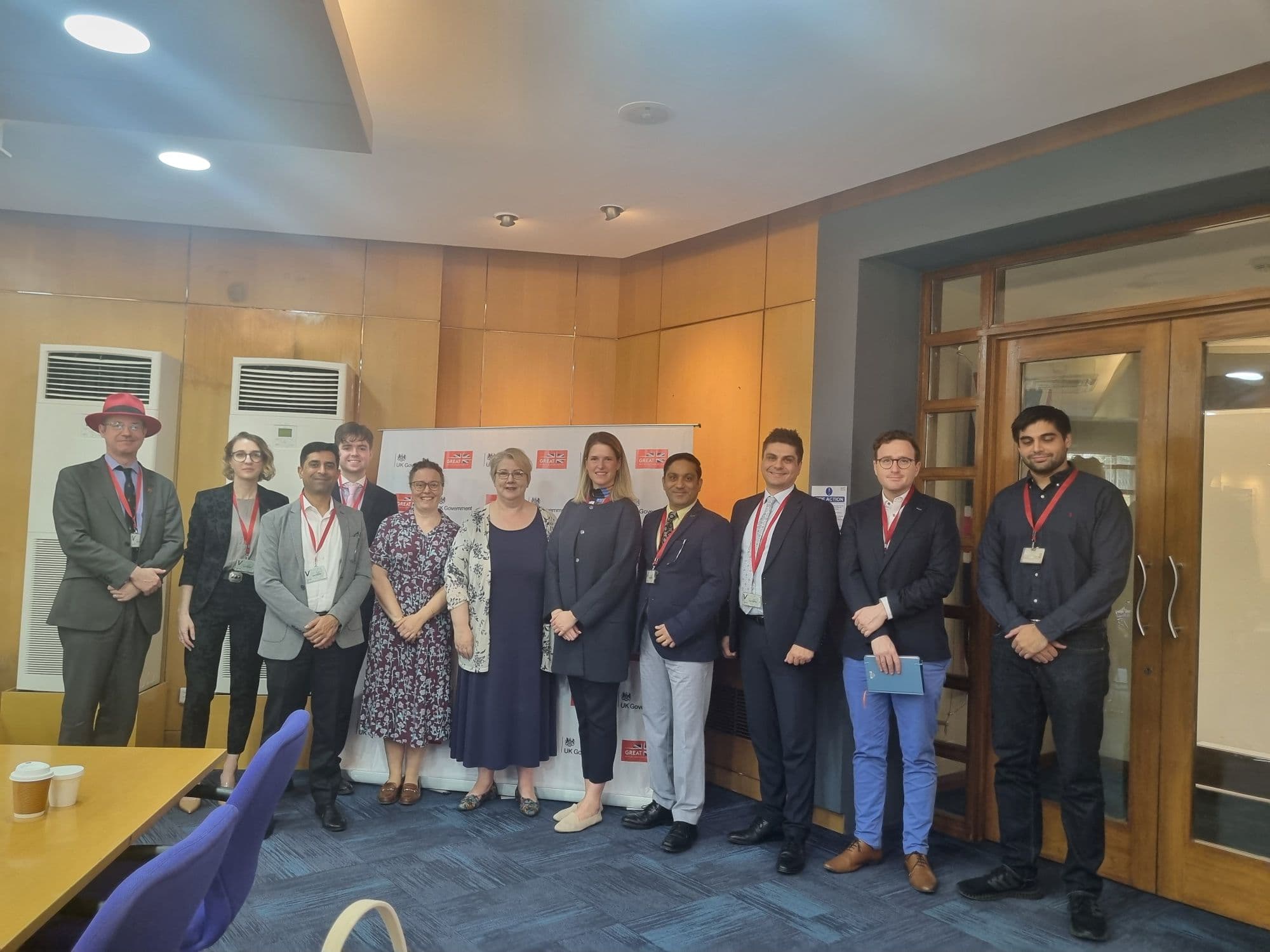
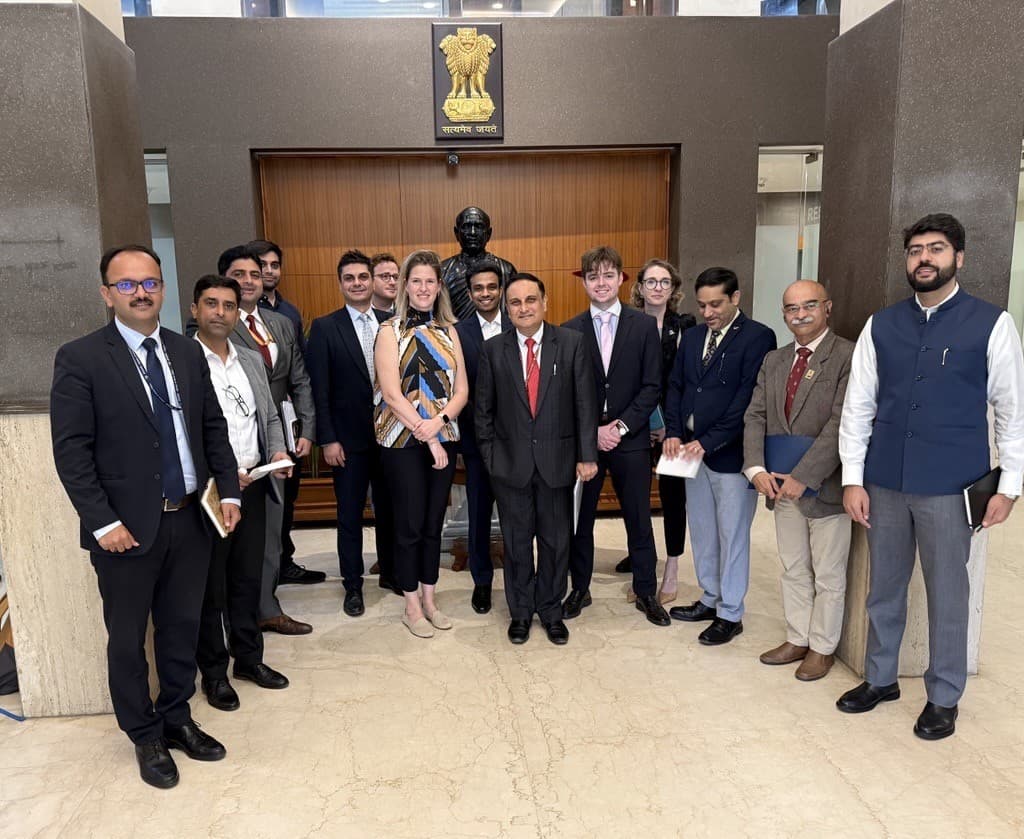
techUK’s international team was proud to lead our first-ever members delegation to India. The first section of the trip was focused on meeting with the Government of India in New Delhi, this was followed by the NASSCOM Technology Leadership Conference in Mumbai. The delegation included ten delegates:
Sabina Ciofu, Associate Director, International, techUK
Daniel Clarke, Policy Manager, International, techUK
Peter Stephens, Director of Government Relations, Arm – Chair of the UK-India Tech Forum
James Lovegrove, EMEA and APAC Public Policy Director, RedHat
Yauheniya Tyler, CEO, Uptitude
Hristo Popov, CBO, Theoremus
Rahul Tyagi, CEO, Secqai
Munish Goswami, Managing Director, VAAMG
Arun Manoharan, Global Head of Strategy Enablement, UBDS Digital
Praveen Kumar, CEO, InsourceIndia
Day 1 – Thursday – New Delhi
Our first stop was the British High Commission, where we met Deputy Trade Commissioner for South Asia, Anna Shobolt, as well as Director for Development, Climate, Science, and Technology, Sally Taylor. The delegation learnt about the Indian market, the status of the UK-India Free Trade Agreement negotiation, the Tech and Security Initiative, as well as the broader Indian politics and policy dynamics.
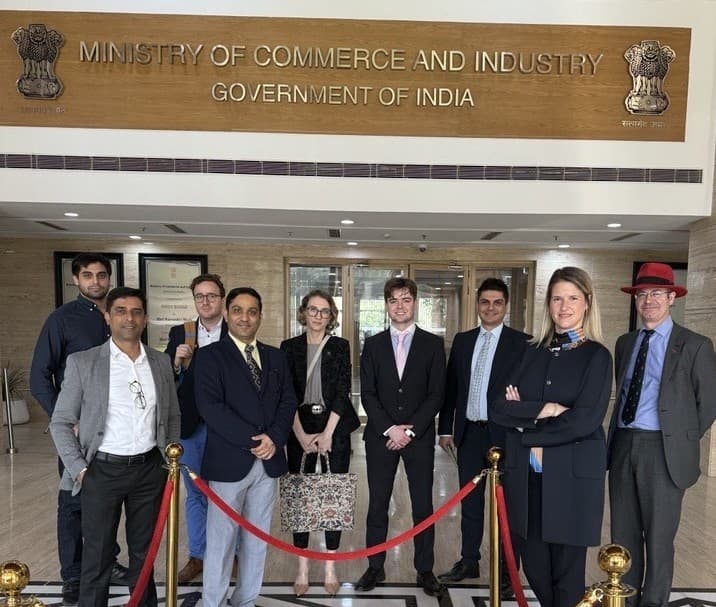
After this, we held a meeting at the Ministry of Commerce and Industry, with senior members of Invest India and the Department for Industry Promotion and Investment teams. Here the delegation learnt about the investment landscape in India, and the areas which the Government of India is prioritising as well as some of the issues faced in these areas. This included a discussion on the latest incentives that the Government of India has to offer in certain strategic tech sub-sectors, including via the Production-linked Investment Scheme announced in the yearly Union Budget on February 1, as well as R&D incentives and how UK industry can better work with the Indian academia.
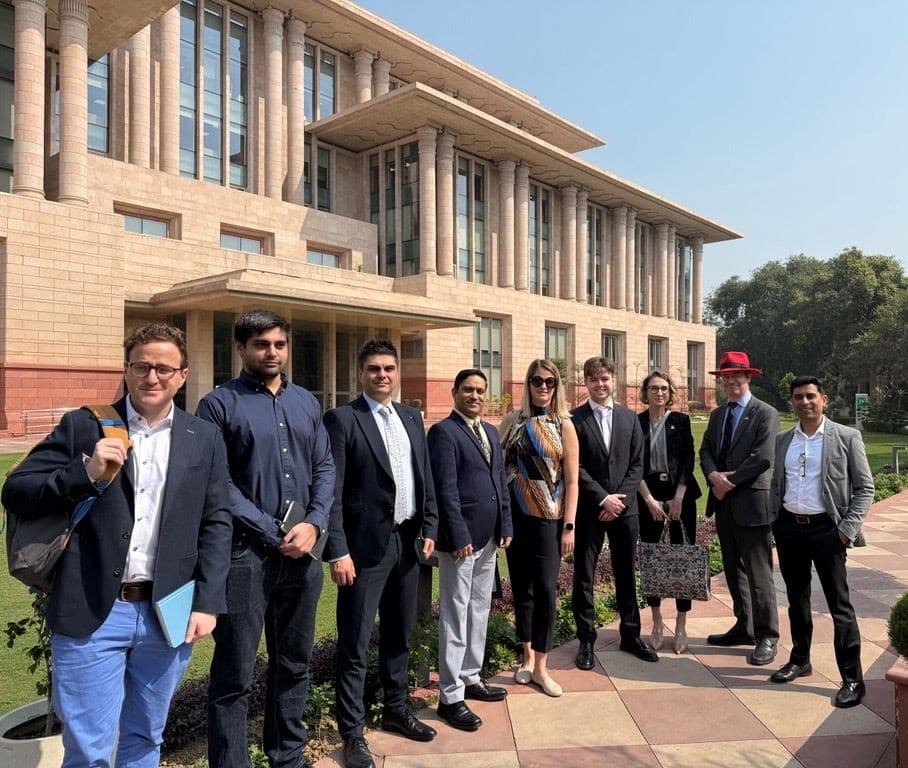
After lunch, the delegation visited the National Security Council Secretariat (NSCS). As the Tech and Security Initiaitive (TSI) is co-chaired by the National Security Advisors from each country, the government body responsible for the TSI in India is the NSCS. Also present at the NSCS meeting were the Confederation of Indian Industry, who are the joint industry delivery partners on the TSI, along with techUK. The delegation heard from Lekhan Thakkar, Joint Secretary of the NSCS, on the vision behind the UK-India TSI as well as some of the progress made to date. This was then followed by an open discussion on where the delegates saw the future of the TSI going, key priorities for UK-India cooperation and some of the non-tariff barriers faced by UK companies in the Indian market.
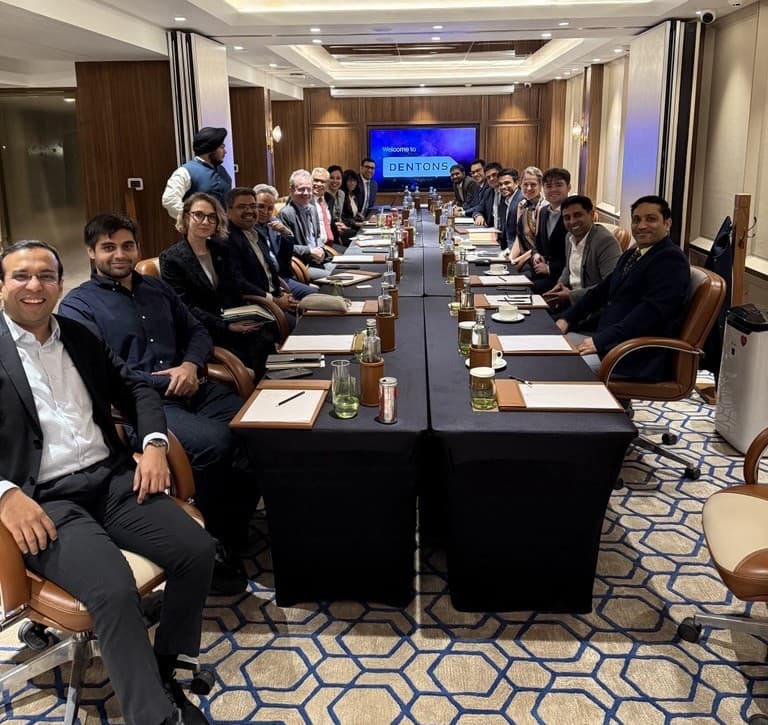
In the evening, our delegation received a briefing on India’s Data Protection Act, led by Atul Sharma, Executive Chairman from leading law firm Dentons Link Legal LLC. The briefing included its similarities and differences between the DPDA and the European Union’s GDPR. The session helped companies understand the compliance burden of the new Indian law and how to best prepare for the Act’s enforcement in the coming months.
Day 2 – Friday – New Delhi
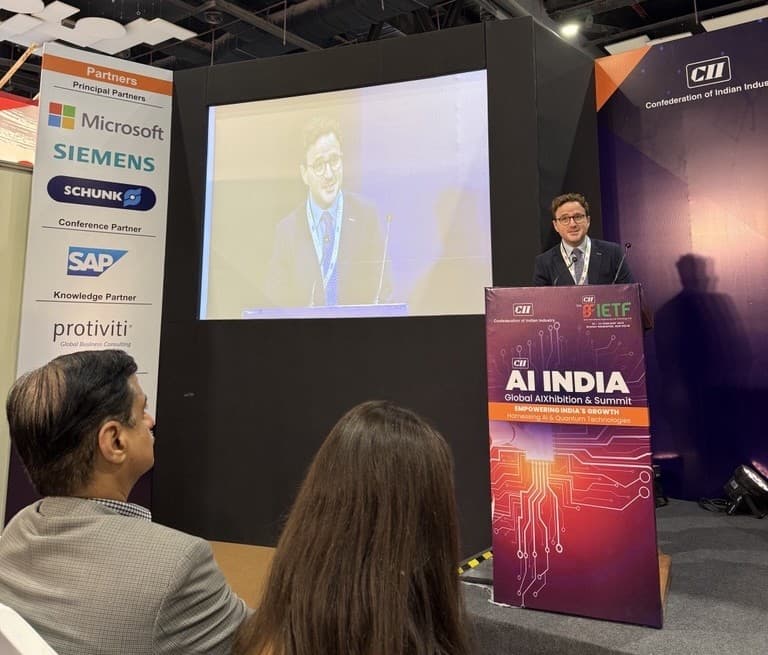
On Friday, the delegation attending the Confederation of Indian Industry’s ‘AI India’ Conference, where UK-India Tech Forum Chair, Peter Stephens, Director of Government Affairs at ARM, spoke at the opening session about the work of the Forum, as well as Arm’s wider work underpinning the growth of artificial intelligence.
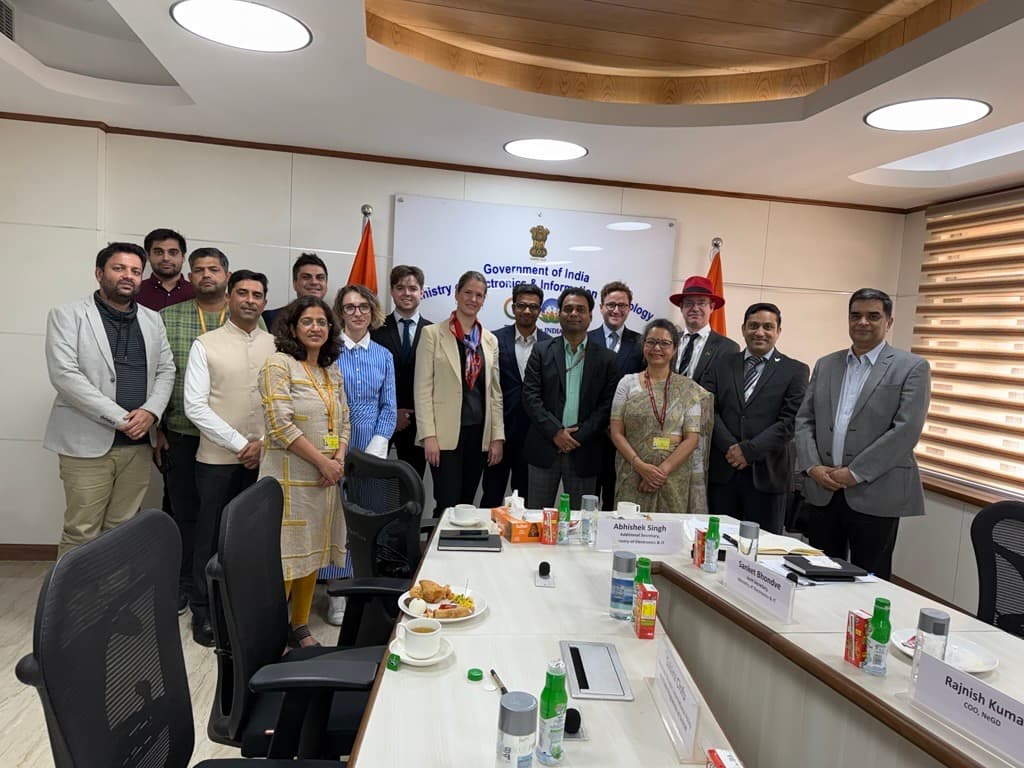
After the Conference, the delegation met with Abhishek Singh, Additional Secretary and Sanket Bhondve, Joint Secretary, at the Ministry of Electronics and Information Technology (MeitY), as well as over a dozen senior civil servants from technology policy areas such as AI, semiconductors, quantum, digital governance, R&D, and more.
We learnt about the Government of India’s key focus areas, notably the respective Semiconductor and AI Missions. India's Semiconductor Mission (ISM) aims to establish a robust domestic semiconductor ecosystem, reducing reliance on imports and enhancing technological self-sufficiency. Launched in 2021 with a $10 billion incentive package, ISM supports chip design, fabrication, and R&D. Key focuses of the Mission include partnerships with global firms, infrastructure development, and talent building, in order to help Indian move up the semiconductor global value chains. MeitY representatives also discussed the Government’s support for RISC-V, the open source chip architecture widely used in the country to help Indian companies compete in the design and development parts of the supply chain, and what collaboration with UK semiconductor companies could look like.
India's AI Mission focuses on deploying artificial intelligence to improve areas like healthcare, education, agriculture, government services, and more. The plan brings together government, universities, and private companies to share ideas, do research, and train workers in AI. India’s mission-driven approach aims to solve everyday challenges using smart technology while boosting its role in the global AI scene, making tech more useful for everyone in communities across India. Notably, the 2025 Edelman Trust Barometer found that 77% of the Indian population have trust in AI, the highest figure in the world.
The delegation also heard the Government of India’s perspective on the AI Action Summit in Paris, co-chaired between India and France, as well as the Government’s plans for the next global AI summit, which will be focused on impact and held in India in early 2026.
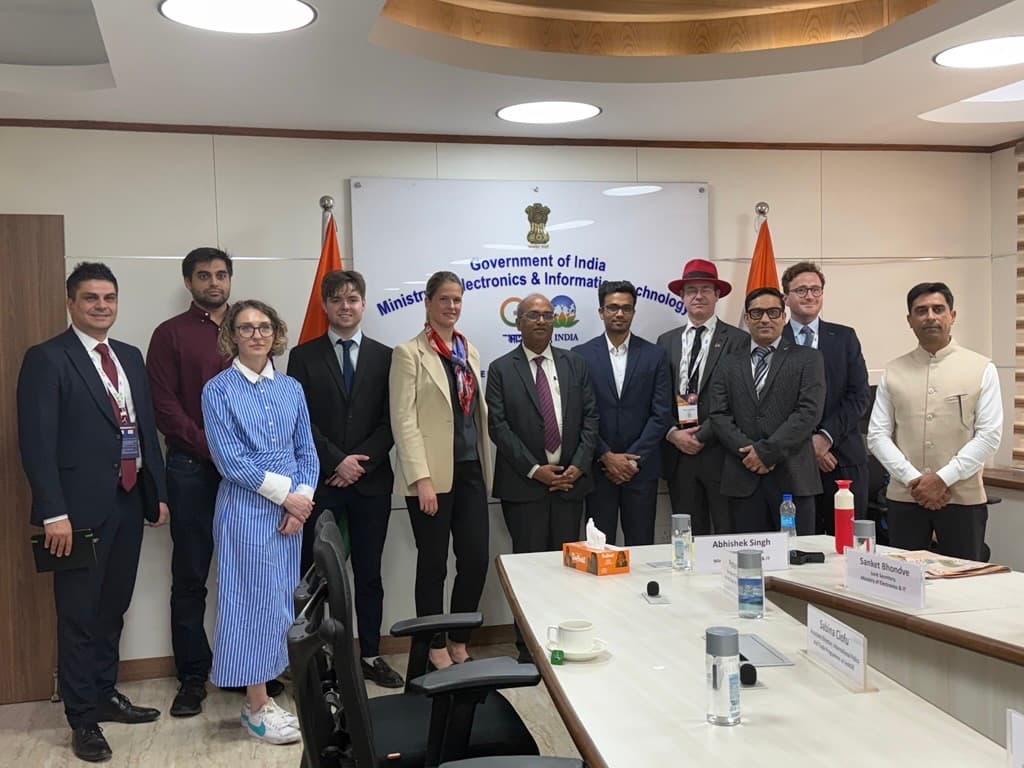
Finally, the Government meetings in New Delhi concluded with a visit to NITI Aayog (National Institute for Transforming India), the apex think-tank which sits inside the Government of India and reports into Prime Minister Nahrendra Modi, with the core objective of helping India become a developed country by 2047.
The delegation met several senior leaders from NITI Aayog, including CEO, B. V. R. Subrahmanyam, and Distinguished Fellow, Debjani Ghosh. CEO Subrahmanyam detailed the role of NITI Aayog within the Indian Government, as well as what India looked for in a global partner. Debjani Ghosh spoke about NITI’s Frontier Tech Hub, which looks at the disruptive tech trends and how they will impact citizen empowerment, industry transformation, government operations, and geopolitical dynamics. The open discussion covered the Government of India’s view on matters of economic security, the WTO, data flows, and the TSI.
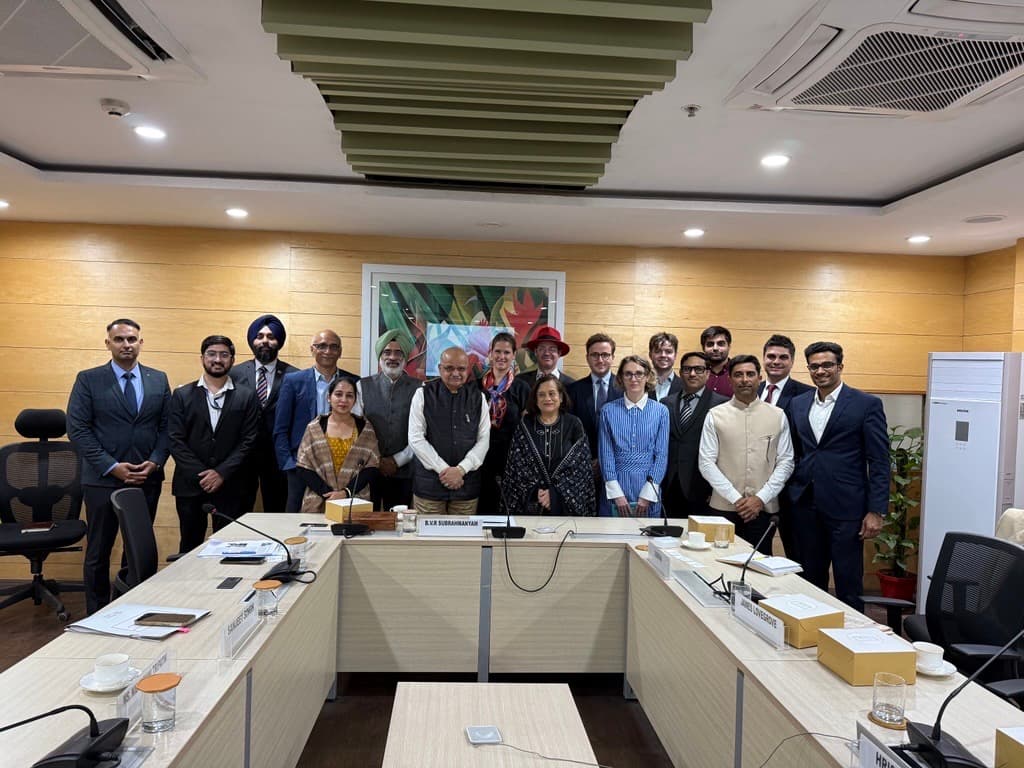
Day 3 – Monday – Mumbai
On Monday, the delegation travelled to Mumbai to attend the 33rd NASSCOM’s Technology Leadership Forum. Delegates spent the day listening to talks on the various stages, networking, and learning more about the Indian tech ecosystem. In the evening, the delegation met with UK Minister for Investment Poppy Gustafsson, and explained what their companies do, their experiences operating in the UK and in India.
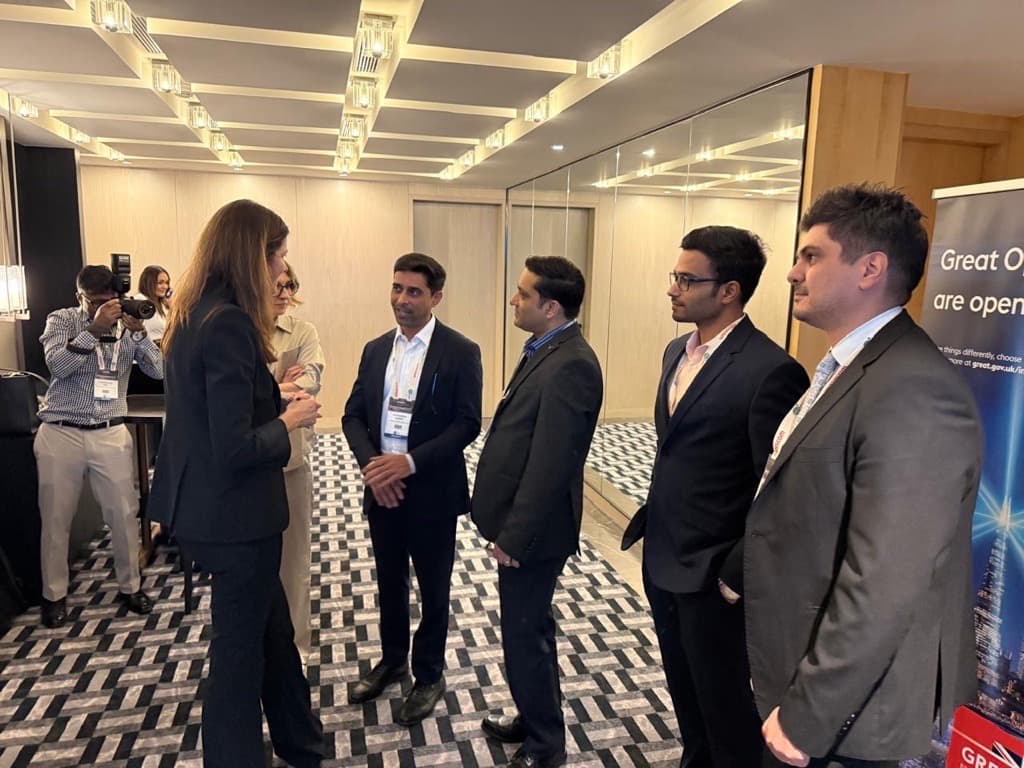
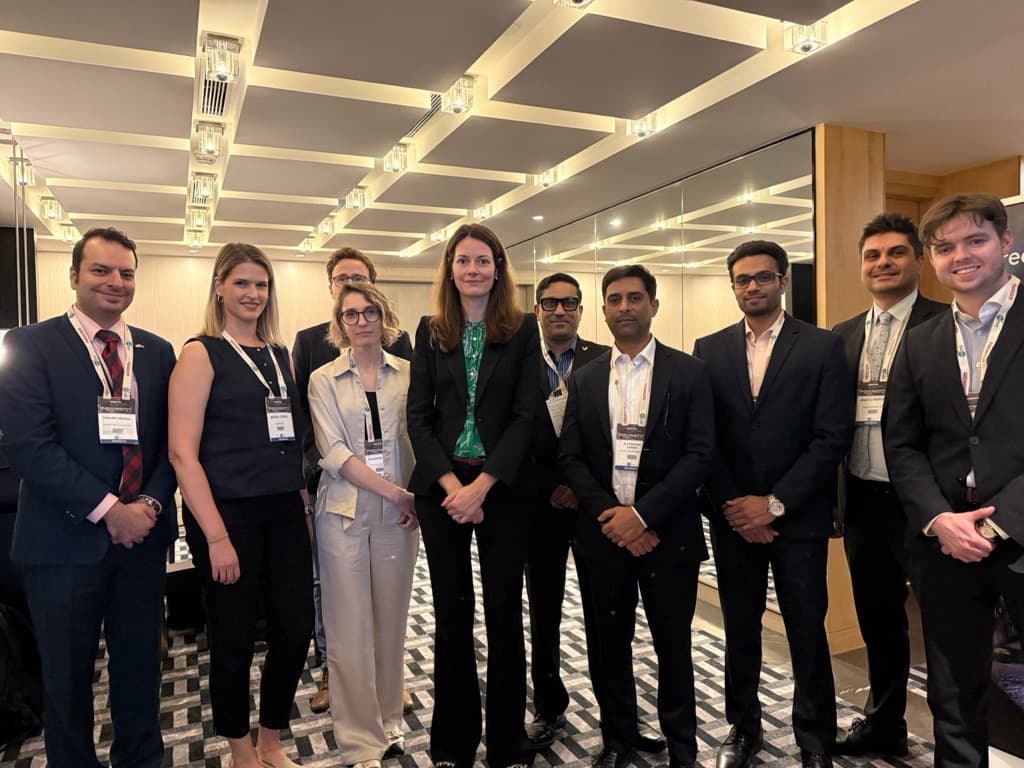
Day 4 – Tuesday – Mumbai
Aside from Conference activities, on Tuesday, the delegation visited Indian conglomerate Larsen & Toubro, where we met with senior executives from the LTI Mindtree, and learnt about what they are doing in AI, semiconductors, quantum computing, and industrial internet of things. This was followed by a tour of the Planet L&T Experience Centre.
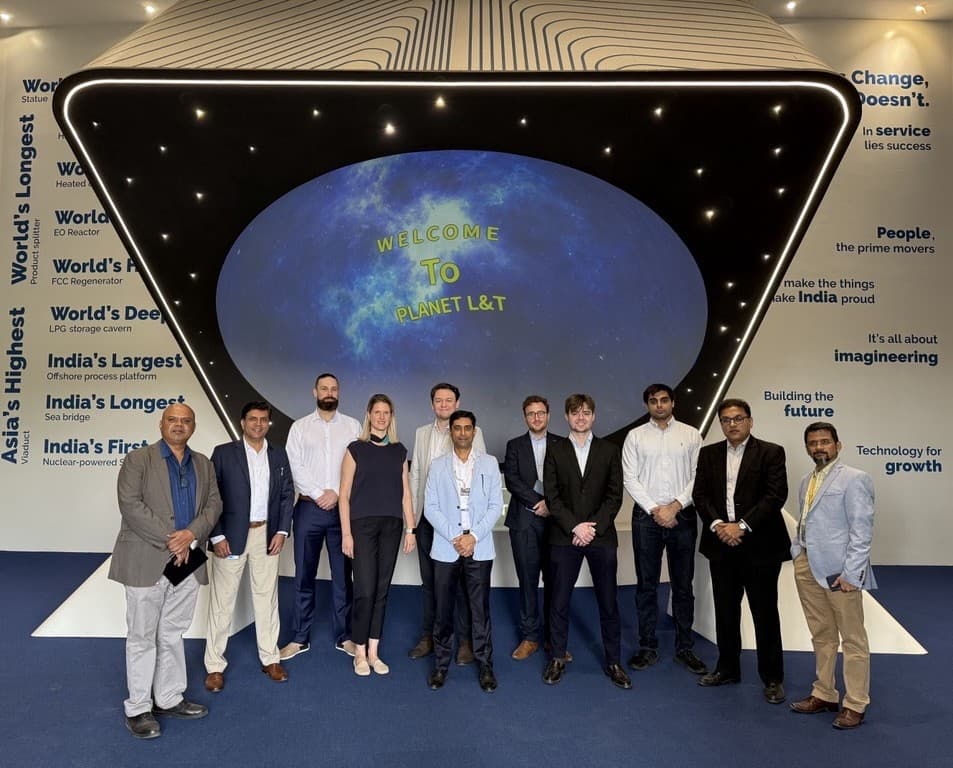
And that concluded a successful, first-ever delegation to India!
If you would be interested in attending future delegations, please email Sabina Ciofu, Associate Director, International at techUK (sabina.ciofu@techuk.org)