Renewable energy and AI: the dynamic duo saving the world, one watt at a time!

AI has emerged as a transformative force in the renewable energy sector, potentially revolutionising solar and wind energy solutions by optimising production, increasing environmental awareness, and enhancing management and distribution. There are many examples where AI / Machine Learning (ML), can work to support the renewable energy sector.
Renewable energy market
Energy and its creation are critical to our modern world. Traditional energy sources, such as coal and oil, have driven industrial growth for centuries. Still, they have contributed significantly to air pollution and climate change - with fossil fuels contributing over 75% to global greenhouse gas emissions. Renewable energy offers a sustainable alternative - with the scaling of renewable energy expected to avoid almost 7 tonnes of CO2 emissions between 2023 and 2030.
The global renewable energy market size was estimated to be USD 1.21 trillion in 2023 and is expected to grow at a compound annual growth rate (CAGR) of 17.2% from 2024 to 2030. The shift towards low-carbon fuels and the presence of stringent environmental regulations have provided a major boost to renewable energy sector. The energy generation market has grown in terms of installed capacity of renewable sources in the past few years on account of growing environmental concerns coupled with pressure to reduce harmful effects of greenhouse gases (GHG).
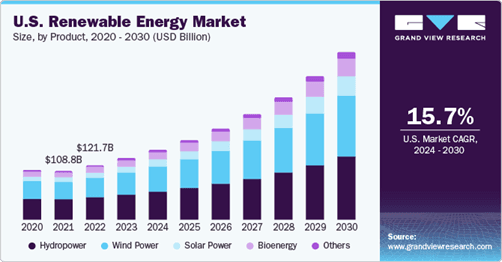
Global renewable capacity additions are set to soar by 107 gigawatts (GW), the largest absolute increase ever, to more than 440 GW in 2023. This is equivalent to more than the entire installed power capacity of Germany and Spain combined. This unprecedented growth is being driven by expanding policy support, growing energy security concerns, and improving competitiveness against fossil fuel alternatives.
AI/ML benefits for renewable energy production
The utilisation of AI/ML can create immense benefits in multiple areas of renewable energy production and distribution. Examples from R&D, finance and trading include:
Forecasting renewable energy generation:
ML algorithms can analyse historical data and weather patterns to predict the output of renewable energy sources such as solar and wind power. This helps grid operators and energy providers better manage the intermittency of renewable energy sources and ensure a reliable power supply.
Optimising energy production:
ML algorithms can optimise the operation of renewable energy systems, such as solar panels and wind turbines, to maximise energy production. By analysing data on factors such as weather conditions, energy demand, and system performance, ML algorithms can adjust the operating parameters of these systems to improve efficiency and output.