Railway maintenance using augmented reality
The project
Railway maintenance is often inconvenient for passengers and expensive for rail operators. Rather than working in a reactive state, new technologies are enabling proactive maintenance and real time performance checks of rail assets.
The 5G Integrated Railway Augmented Reality Digital Twin (ARDT) project, funded by Innovate UK, created a platform through which rail assets, rolling stock and station control systems are connected via a mobile private network (MPN) to improve efficiency, training and passenger experience.
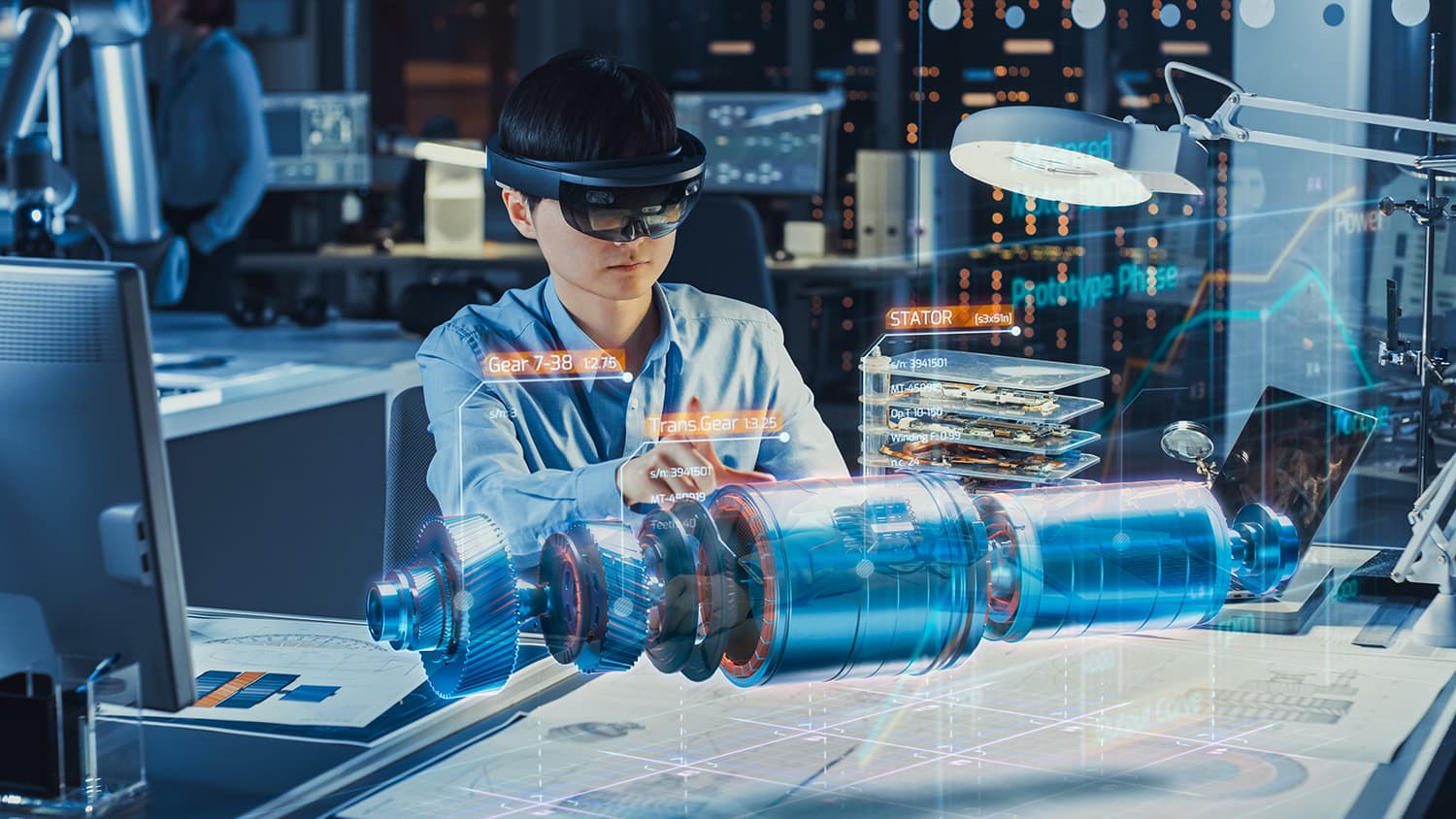
The project aim was to implement remote condition monitoring to predict and diagnose faults, reducing the frequency of routine maintenance and minimising costly disruption when faults occur. The Digital Twin provides live feeds of faults and animated step by step instructions to engineers using augmented reality (AR) technology and was demonstrated at Mobile World Congress 2022.
The problem
Digital Twins need assured connectivity between the end points and the cloud. In many areas of the railway track and assets wireless coverage from operators is not present and Wi-Fi simply cannot provide the extended coverage needed. Even in areas where public cellular is available, throughput is not reliable as it can be affected by congestion from consumers in trains. From a security viewpoint, it’s also not desirable to have critical national infrastructure data passing over Wi-Fi or public cellular networks.
How was it done?
The project team was led by PAULEY, supported by HS1, Network Rail High Speed, Athonet and University of Sheffield Advanced Manufacturing Research Centre (AMRC). Freshwave provided the radio coverage plan, network build services, cloud core hardware and operations support in close partnership with Athonet who provided the network design, 5G core software and network equipment. The work demonstrated the unique capabilities of a 5G-enabled ARDT platform, applied both within a station and along several kilometres of track.
The project created a system to remotely provide data on the health of multiple systems to enable diagnostic review and reduce future failures. Live data feeds were provided over the MPN, into the new HS1 Digital Twin Cloud and articulated through a digital dashboard interface that HS1 and Network Rail High Speed users access through wearable AR headsets and desktop applications.
The solution
Private network provides secure network on segregated spectrum with no interference from public networks or Wi-Fi. Coverage is tailored to reach the specific areas that are critical to railway operations. Physical SIM-based security makes it highly secure and inaccessible to unauthorised users.
What the client said
Richard Thorp, Engineering Director HS1 Ltd:
“The Digital Twin is really important for us. It actually shows how we are bringing live asset data to the point of need; where the technicians need it and where the operations staff need it. And actually tied in what is happening on the operational railway to our station assets, which we have never done before.”
Dyan Crowther, CEO of HS1 Ltd:
“Innovation is at the heart of what we do at HS1. We are proud to have carried out this successful trial of technology which has the potential to improve people’s experiences of the railways. This trial clearly showcases how Digital Twins can help us achieve our ultimate goal of running a world-beating railway, reducing delays and improving our carbon footprint.”
For more information about PAULEY — head to their website
For more information about Athonet — head to their website
Get in touch: If you’re looking to solve a complex local connectivity issue and are wondering if a mobile private network might be what you need, please contact info@freshwavegroup.com or visit freshwavegroup.com.
To read more from the Future Private Networks campaign week check out our landing page here.