Britain's Robot Moment: How the UK Can Lead on Responsible Robotics at Scale
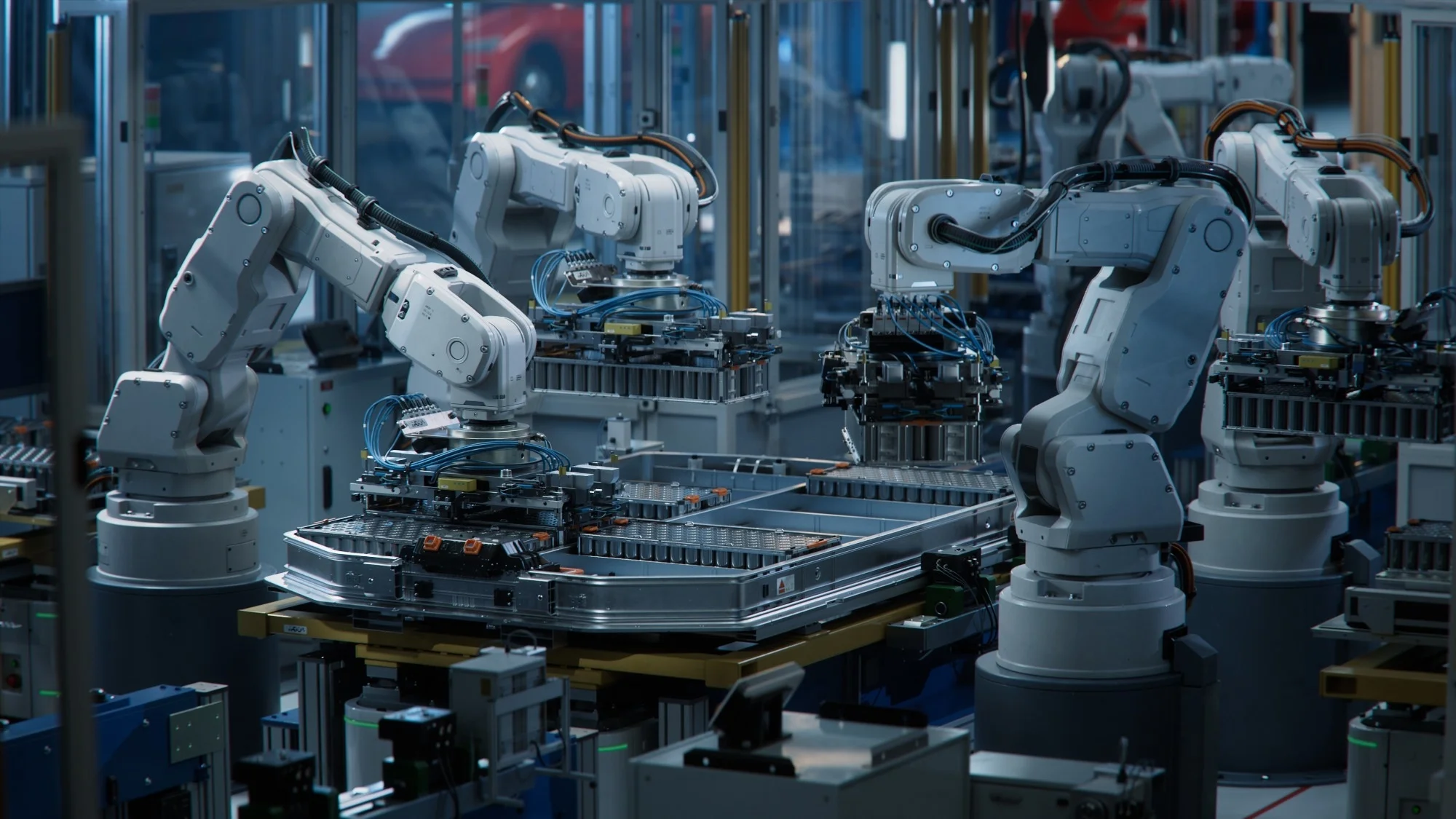
Something shifted in British manufacturing in 2023 that didn't make nearly enough headlines. Industrial robot installations in the UK hit a record high of 3,830 units, a 51% year-on-year increase. The automotive sector alone deployed 1,924 new robots, a 297% increase, largely driven by the transition to electric vehicles. That's not a trend. That's a turning point.
We are now at the beginning of a robotics revolution. The question is no longer whether robots will reshape the UK economy. It's whether Britain will lead that transformation, or simply be reshaped by it.
The Scale of What's Coming
The numbers are hard to ignore. Analysis from the Robotics Growth Partnership suggests that widespread adoption of robotics and smart machines could add up to £150 billion in Gross Value Added over the next decade. Manufacturing currently accounts for around 10% of UK GDP; scaling robotics adoption meaningfully could push that toward 15%, adding £142 billion to the economy.
The technology itself is accelerating. Breakthroughs in AI, sensing technologies, computing power, and advanced materials are converging to create robots that are no longer rigid, single-task machines. They are increasingly capable, connected, and autonomous, able to perceive, learn, and collaborate alongside humans. From AI-driven cobots on factory floors to autonomous surgical assistants in NHS operating theatres, from drones inspecting offshore wind farms to warehouse robots handling last-mile logistics, the robots arriving now are categorically different from those of a decade ago.
London-based Humanoid announced the launch of its HMND 01 Alpha, a dual-armed mobile manipulator for industrial use, developed in just seven months. Oxford's Oxa recently closed a £77.2 million Series D round for autonomous vehicle technology. The National Robotarium in Edinburgh is working with NVIDIA and is building a robotics and AI ecosystem directly targeting UK leadership in physical AI. The innovation is real and is here.
Britain's Genuine Strengths
The UK is not starting from behind. It has world-class robotics research coming out of universities in Edinburgh, Bristol, Imperial, and UCL. It has a Regulatory Innovation Office (RIO) actively clearing outdated rules that slow frontier technologies to market. It has the Industrial Strategy 2025 committing £2.8 billion in R&D over five years, £29 million annually to Made Smarter Innovation, and crucially £40 million in initial funding for a new UK-wide network of Robotics Adoption Hubs.
Those hubs matter enormously. The UK's challenge has never been a shortage of brilliant robotics ideas. It has been the valley of death between laboratory innovation and real-world deployment at scale. Adoption hubs, combining research facilities, testing capabilities, equipment access, and expert
guidance, are precisely the infrastructure needed to help SMEs and mid-sized firms cross that valley without requiring vast upfront capital.
The National Robotarium itself is a proof of concept. Established with £22.4 million in city-region deal funding, it has already delivered remarkable results: supporting early-stage businesses,
fast-tracking new technologies into healthcare, nuclear, agriculture, and aerospace. Replicating that model across the UK is not an ambition for ambition's sake. It's the logical next step.
The Responsibility Gap
But here is where the harder conversation begins. Innovation and responsible adoption are not the same thing, and conflating them is how countries end up with powerful technology and a fractured public trust in it.
The ethical stakes in robotics are real. Autonomous systems are making decisions in hiring pipelines, logistics routing, and healthcare triage that were made by humans previously. As robots take on more of these roles, questions of accountability, transparency, and bias don't disappear; they become more urgent. Who is responsible when an autonomous system makes a harmful error? How do we ensure that the productivity gains from robotics don't accrue exclusively to capital owners, leaving workers behind?
Then there's the workforce question. Global estimates suggest automation could displace hundreds of millions of jobs by 2030 if transition support is inadequate. The UK has a narrow window to get ahead of this. That means not waiting for displacement to happen and then scrambling to retrain people, it means co-designing automation with workers, building reskilling pathways into robotics adoption programmes from day one, and treating workforce transition as a national infrastructure project, not an afterthought.
What Responsible Leadership Actually Looks Like
Leading on responsible robotics adoption means doing four things at once:
Build sector-specific regulatory clarity. Clear routes to market for autonomous vehicles, drones, surgical robots, and humanoid systems, not one-size-fits-all rules that either strangle innovation or create dangerous gaps. The Smart Machines Strategy 2035 is a foundation; it needs implementation at pace.
Make public trust a design requirement. Transparency, explainability, and inclusive design cannot be retrofitted. They must be embedded at the point of development, not bolted on after deployment. Public trust is not a soft metric; it is the precondition for adoption at scale.
Invest in people as seriously as machines. Embed robotics literacy into education from primary school onwards. Create vocational qualifications in robotics across health, construction, agriculture, and engineering. Fund reskilling at the same level we fund the robots themselves.
Connect innovation to adoption, not just to research. The UK's comparative advantage is not just in building brilliant robots, it's in the quality of its institutions, its research base, and its capacity for ethical governance. The Robotics Adoption Hubs, the National Robotarium network, and the Made
Smarter programme must be funded and scaled to close the gap between what British researchers invent and what British industries actually deploy.
The Moment
Britain has a genuine and time-limited opportunity here. The technology is ready. The policy architecture is taking shape. The funding, while still modest relative to the US and China, is moving in the right direction.
But the window for leadership is not permanently open. Countries that move fastest on responsible adoption frameworks will set the global standards that others follow. The UK has the research excellence, the regulatory credibility, and the institutional infrastructure to be that country.
The choice is straightforward: lead the robotics revolution, or be led by it. The responsible path and the ambitious path are the same. Britain should take it.