Space-based compute: hype, physics and the UK opportunity
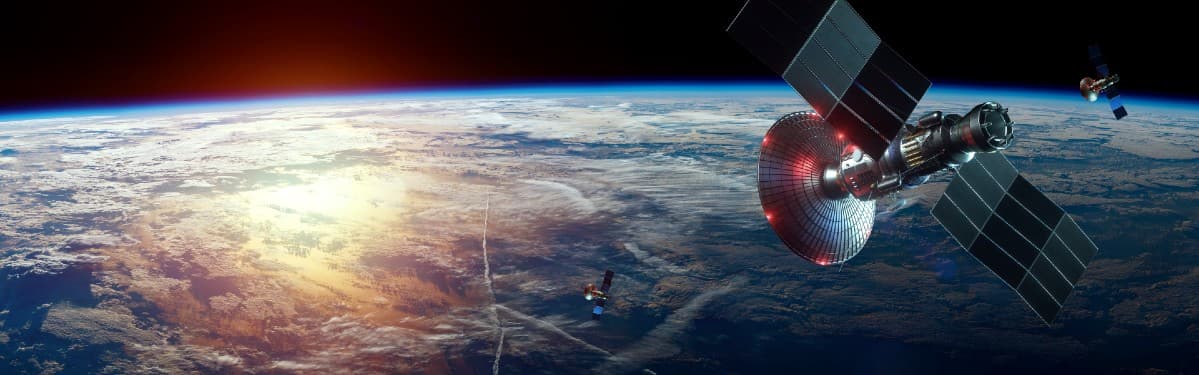
Grid connections for new data centres are now measured in years. Launch costs have collapsed. As a result, compute is heading for orbit. GPUs are already running AI workloads up there, and the first commercial data centre nodes launched in January. Building on techUK's wider Frontier Compute focus, this event, hosted by HPE, set out to separate the hype from the physics and ask where the UK can genuinely lead.
Speakers included:
Kirk Bresniker, HPE Labs Chief Architect, AI Research Lab Director (Interim), HPE Fellow/VP, HPE
Norm Follett Senior Director – HPE Space Technologies & Solutions Group, HPE
Nikki Antoniou, Future Systems Chief Engineer, Airbus Defence and Space Limited
Professor David Grace, Research Professor, University of York
Simon Reid, Space systems consultant, Satellite Applications Catapult
Dr Sanat Kumar Nagaraju, Emerging Technologies Leader, NTT DATA
Please note this session was not recorded. The points below summarise the key takeaways from the discussion.
Top takeaways:
The physics is being proven, one stepping stone at a time: Space-based compute isn't starting from zero. Commercial off-the-shelf hardware has been put through demanding HPC benchmarks in orbit and performed much as it does on the ground. Edge computing for day-to-day operations in space was proven in 2017, AI processing on satellites using off-the-shelf hardware followed in 2019, and on-board processing now runs commercially for satellite IoT and environmental monitoring. Panellists were realistic that progress will come in stages as technologies converge, but the engineering limits being hit today are themselves driving innovation and opening up supply chain opportunities.
Solve the communications bottleneck first: Links between the ground and space are slow, expensive (around $530 per gigabyte was cited) and frequently lost beyond line of sight. That makes the case for processing in orbit: sending back kilobytes of answers rather than terabytes of raw data. The immediate need is clear, from active debris removal, docking and identifying threatening objects to ISR and giving astronauts real-time information to make better decisions. With communication delays of up to 100 minutes, spacecraft also need to operate autonomously. For orbital data centres to become a reality, the links must scale with the hardware, including free-space optical communications between nodes in orbit and down to high-altitude platform stations, which could also deliver last-mile, direct-to-device connectivity at terabit rates.
No single technology wins on its own: Asked which technology to bet on, the panel's answer was all of them. AI, HPC, quantum, photonics and space systems each bring one piece of a larger system, and progress in one compounds progress in the others, with quantum, for example, depending on better AI. No single company or community can design this alone, so holistic, international co-design is needed. Panellists also urged discipline: every workload should be judged on whether it genuinely belongs in space or on the ground, and orbits chosen strategically, since latency-tolerant tasks such as training don't need low orbits. Nothing should go into space simply because it can.
Build security and sustainability in from the start: The space industry has moved more slowly than other sectors because of its secure-by-design approach, and a secure, resilient backbone for getting critical data down safely remains the first priority. Reducing the cyber risk of sharing data could also help head off sovereignty races. On sustainability, large constellations raise hard questions about what happens on re-entry, from satellites vaporising in the atmosphere to the loss of exotic materials that are rare on Earth. Europe has a debris policy, but commercial players are moving faster than legislation, and panellists warned of a possible space environmental crisis unless the circular economy and long-term effects are considered from day one. Some argued for pursuing the art of the possible for good, confident that controls will follow.
Government should set the vision and act as first buyer: Space is fundamentally a data industry, and the commercial case is becoming real as costs fall and investment arrives from outside the sector. Emerging applications include first responder systems, asset monitoring, agriculture and the public sector, but government and defence remain the first buyers. Panellists called for government to focus less on regulating and more on setting a clear vision and strategy that academia and industry can rally behind, moving beyond R&D grants towards incentives that unlock private investment. The UK has real strengths in building, registering and operating space systems, plus the talent to match. The challenge is to use them well, balancing collaboration with allies such as Japan against the need for sovereign capability, and being willing to build, get it wrong and go again.
This event was part of techUK's Emerging Technology and Innovation programme and sits within a year-long focus on the next frontier of compute set to explore how the UK can lead on the development and deployment of Frontier Compute technologies.
techUK members and stakeholders can participate in regular speaking, writing, networking, partnership, or sponsorship opportunities.
Find our more or reach out the team to below to discuss how your organisation can get involved.